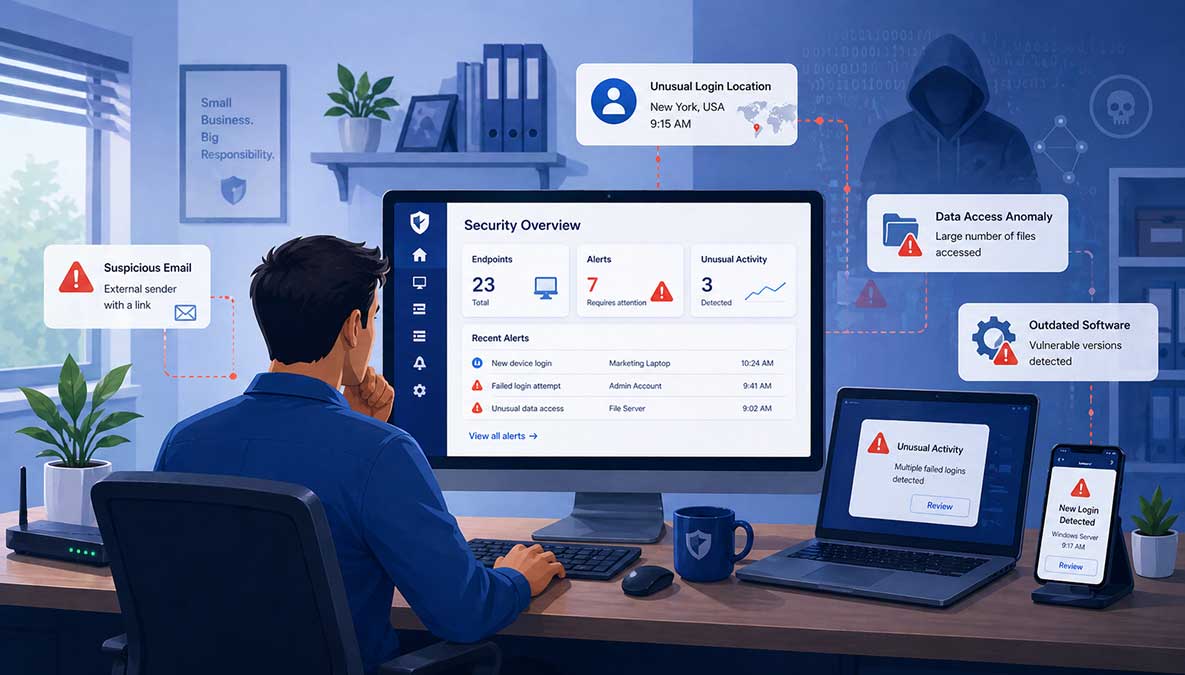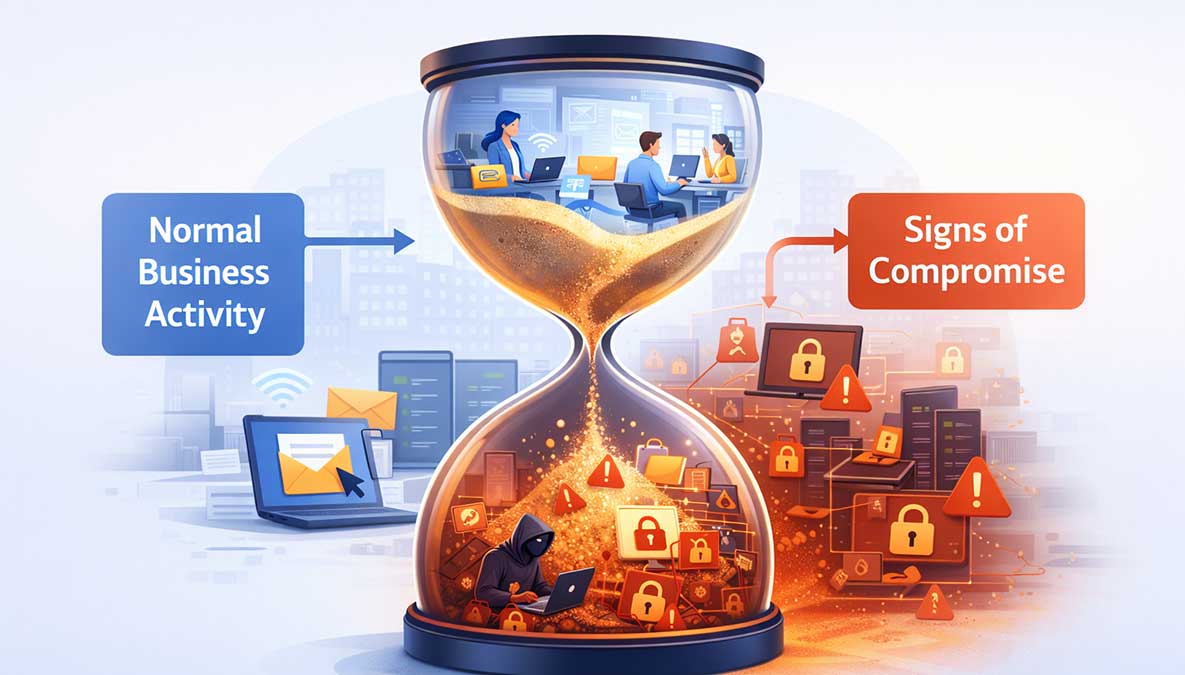
Think for a moment about your standard workday. You probably check email, read messages in Slack or Teams, download and read documents, and send messages of your own. While all of this is going on, what you don't see is the constant stream of activity happening in the background. Files are being scanned as they open. Network connections are being evaluated. Behavior is being compared against millions of known attack patterns. Somewhere, far away, automated systems and human analysts are watching for anything that doesn't belong.
This is how modern cybersecurity works. It's not a single firewall or a once-a-day virus scan. It's an ecosystem of tools, software agents, automation, and people, all working together in real time to stop threats before users ever notice them.
At the core of most modern cybersecurity platforms is something called an endpoint agent. An endpoint is any device that connects to your systems, such as a laptop, desktop, or server. The agent is a small piece of software installed on that device. Despite how powerful it is, a modern agent is designed to be lightweight and unobtrusive. Users don't interact with it directly. Instead, it quietly monitors activity and reports telemetry back to a centralized system.
These agents typically handle several responsibilities at once:
Platforms like NinjaOne focus heavily on this agent-based approach. A single agent can handle patch management, device monitoring, scripting, and integration with security tools. That consolidation matters, especially for smaller organizations that don't want multiple overlapping tools running on every device.
Traditional antivirus relied on known signatures. If a file matched a known virus fingerprint, it was blocked. That approach worked when threats changed slowly. Today, it's not enough. Modern cybersecurity companies rely on real-time threat detection, which looks at behavior rather than just known signatures.
For example:
These behaviors are evaluated instantly. Tools like SentinelOne use AI-driven behavioral models to decide whether something is normal or malicious, even if the exact malware has never been seen before. The key idea is speed. Attacks often unfold in seconds. The faster something can be identified and stopped, the less damage it can do.
Sponsored
Most small businesses assume they're too small to be targeted, until something goes wrong. The reality is that modern threats don't discriminate, and staying protected requires constant attention. That's where Simplified Solutions comes in.
Instead of reacting to problems after they happen, you can proactively protect your devices, detect threats early, and stay secure without adding complexity to your day.
When a threat is detected, cybersecurity platforms can respond in different ways. Most use a combination of automated actions and human oversight.
Automated response
Automation handles the first line of defense. Depending on the severity, the system might:
This all happens without waiting for human input. The goal is containment. Stop the threat immediately, then investigate.
SentinelOne, for example, is well known for its ability to autonomously stop and remediate attacks at machine speed. That autonomy is especially valuable outside normal business hours, when no one is watching alerts.
Human-managed response
Automation is powerful, but humans still matter. This is where managed detection and response comes in.
Companies like Huntress focus heavily on human-led threat hunting. Their analysts actively look for signs of compromise that automated systems might miss, especially subtle persistence mechanisms or attacker “hands-on-keyboard” activity.
In a human-managed model:
This combination of AI for speed and humans for judgment is becoming the standard model in cybersecurity.
Another key piece of how cybersecurity companies work is centralization. Individual devices don't operate in isolation. All the data they generate flows into a centralized dashboard.
From there, security teams or managed providers can:
NinjaOne excels in this area by combining monitoring, patching, scripting, and alerting into a single interface. That unified view reduces complexity and makes it easier to act quickly when something goes wrong.
Threats evolve constantly. Cybersecurity companies stay effective by continuously updating their detection models and sharing intelligence across their platforms.
When a new attack technique is discovered:
This means one organization's encounter with a threat can help protect thousands of others. It's a collective defense model that works best when agents are consistently online, updated, and reporting.
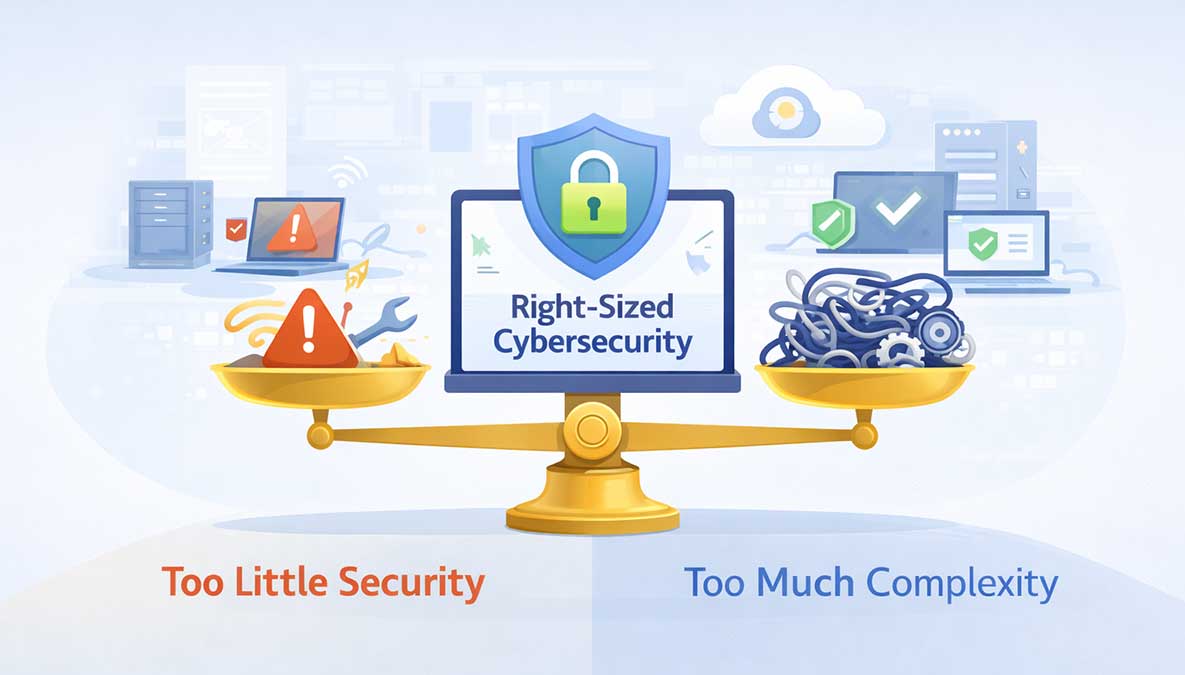
Small businesses, nonprofits, and churches often assume cybersecurity requires a large internal IT team. In reality, the agent-based model exists precisely because most organizations don't have that kind of staff.
With the right setup:
Cybersecurity companies are not just selling software. They are building layered systems that combine automation, intelligence, and expertise, all designed to reduce risk without demanding constant attention from the user.
The best cybersecurity is often invisible. Users go about their day unaware of the threats that never reach them. Files that never execute. Connections that never complete. Attacks that fail silently.
That quiet success is the result of endpoint agents doing their job, AI evaluating behavior in real time, and humans stepping in when machines need context. It's not magic, and it's not fear-driven. It's engineering, experience, and constant vigilance, working together behind the scenes.
Sponsored
Start your 14-day free trial and get visibility into your devices in minutes, no IT team required.
 Ben Loveless
Co-founder and Developer
Ben Loveless
Co-founder and Developer