Cybersecurity is no longer defined by a single firewall or a nightly antivirus scan. As we move into 2026, the threat landscape has shifted toward automation, artificial intelligence, and speed. Attacks are faster, more convincing, and often harder to distinguish from normal activity. At the same time, defenses have evolved to rely more heavily on behavior analysis, real-time response, and continuous monitoring.
What follows are some of the most important ways cybersecurity is changing—and what organizations can do to defend themselves.
Phishing used to be easy to spot. Poor grammar, generic greetings, and suspicious links gave attackers away. That era is ending. AI tools now allow attackers to generate messages that match tone, context, and writing style with unsettling accuracy. These messages can reference real projects, real coworkers, and real events.
Why this matters:
Email and messaging remain the most common entry points for attackers. When messages look human and relevant, even experienced users can make mistakes.
Defensive approach:
Modern endpoint security and email monitoring tools increasingly rely on behavioral analysis instead of static rules. Pairing these tools with multi-factor authentication dramatically reduces the impact of stolen credentials, even when phishing succeeds.
Synthetic voice and video technology is advancing quickly. Attackers can now impersonate executives, vendors, or IT staff with enough realism to trigger wire transfers, password resets, or data sharing. This erodes one of the oldest assumptions in security: that a familiar voice or face equals legitimacy.
Why this matters:
Verification processes that rely on recognition alone are no longer reliable. Trust must be validated, not assumed.
Defensive approach:
Zero-trust principles are becoming essential. Identity verification, access controls, and out-of-band confirmation workflows help ensure that sensitive actions require more than just a convincing message.
Modern malware no longer behaves the same way on every system. AI-assisted malware can analyze its environment, adjust its behavior, and delay execution to avoid detection. Some threats now mutate or operate entirely in memory, leaving little forensic evidence behind.
Why this matters:
Traditional signature-based antivirus struggles to keep up with threats that constantly change.
Defensive approach:
Behavior-based endpoint detection tools are now foundational. Platforms that monitor process behavior, memory usage, and system activity in real time are far better equipped to stop adaptive threats before damage occurs.
Sponsored
Knowing what to do is only half the battle; actually keeping systems updated, monitored, and protected is where most small businesses fall behind. That's why we built Simplified Solutions.
Instead of juggling tools or relying on manual processes, you can protect every device, stay up to date automatically, and get peace of mind without needing an IT team.
Cybercrime is no longer limited to highly skilled actors. AI tools and cybercrime-as-a-service platforms allow attackers to automate reconnaissance, vulnerability scanning, and even exploit generation. This means more attacks, launched faster, by less experienced operators.
Why this matters:
Organizations are no longer targeted only because they are valuable. They are targeted because they are reachable.
Defensive approach:
Automated defenses matter just as much as automated attacks. Continuous monitoring, patch management, and centralized visibility help ensure that exposed systems are identified and secured before attackers find them.
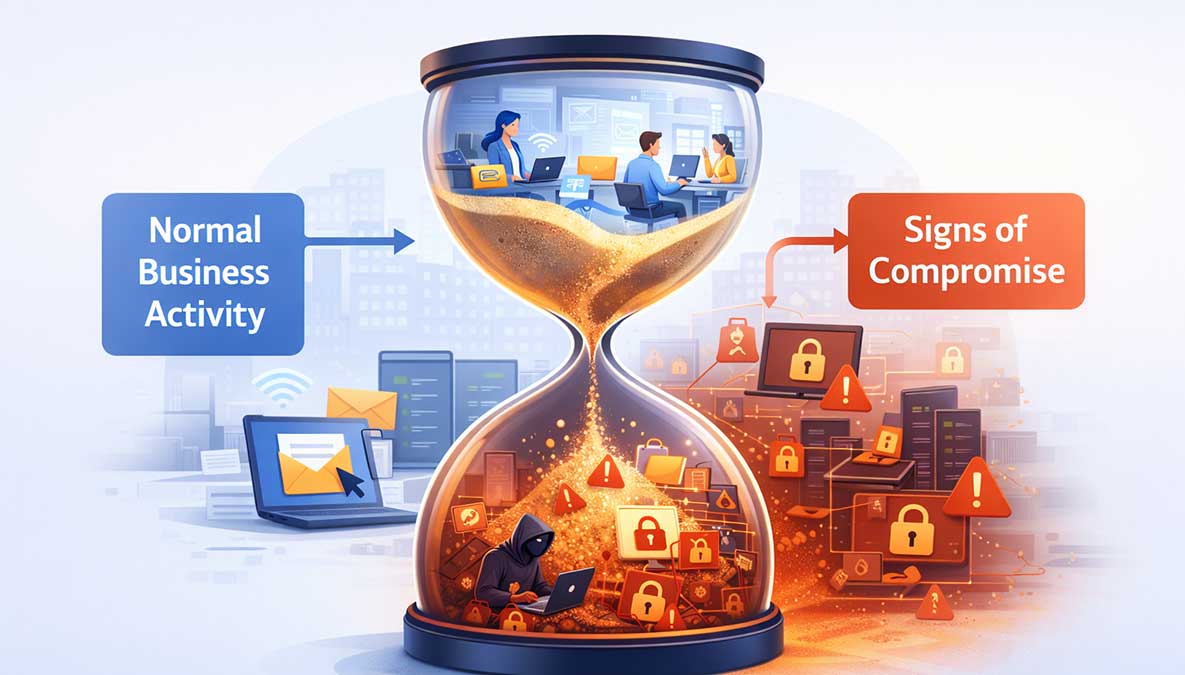
No organization can realistically prevent every attack. As threats become more automated and persistent, the emphasis is shifting toward how quickly an organization can detect, contain, and recover from an incident.
Why this matters:
A delayed response often causes more damage than the initial breach itself.
Defensive approach:
Real-time alerting, automated containment, and clear response workflows are becoming core requirements. Isolating a compromised device within seconds can prevent an incident from spreading across an organization.
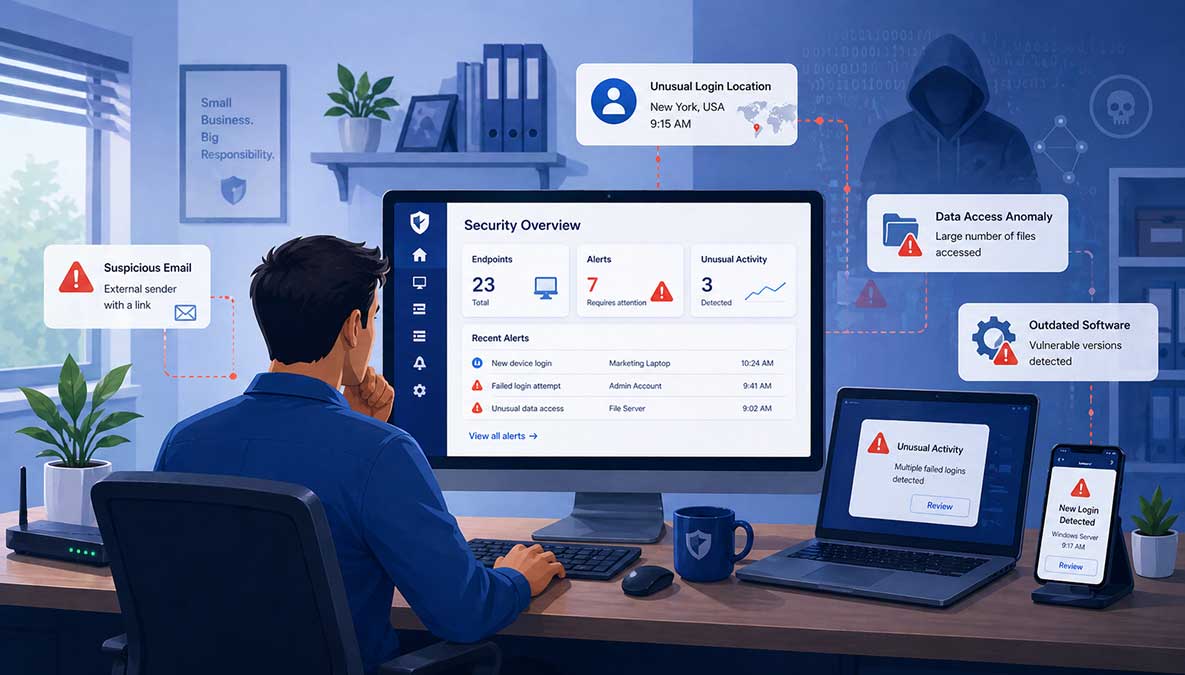
While attackers are adopting AI, defenders are doing the same. Machine learning is now used to correlate signals across devices, identify subtle anomalies, and prioritize alerts that matter most. This is especially important for smaller organizations that cannot staff a full security operations center.
Defensive approach:
AI-powered monitoring combined with human oversight allows even small teams to operate effectively. Automation handles speed and scale, while human analysts provide judgment and context when needed.
Despite the rise of automation, cybersecurity is not becoming fully autonomous on the defensive side. Human-led threat hunting, incident investigation, and policy refinement remain essential. Tools can surface threats, but people still make decisions about risk and response.
Defensive approach:
Blending AI-driven detection with human-managed response creates a layered defense that balances speed with accuracy. This hybrid model is becoming the standard across the industry.
As 2026 approaches, cybersecurity is no longer a background IT concern. It is an operational reality that touches every device, user, and workflow. The good news is that defenses have evolved alongside threats.
Organizations that focus on:
are far better positioned to operate safely, even as attacks grow more sophisticated.
Cybersecurity is not about predicting the future perfectly. It is about building systems that can adapt, respond, and recover when the unexpected happens.
Sponsored
Start your 14-day free trial and get visibility into your devices in minutes, no IT team required.
 Ben Loveless
Co-founder and Developer
Ben Loveless
Co-founder and Developer