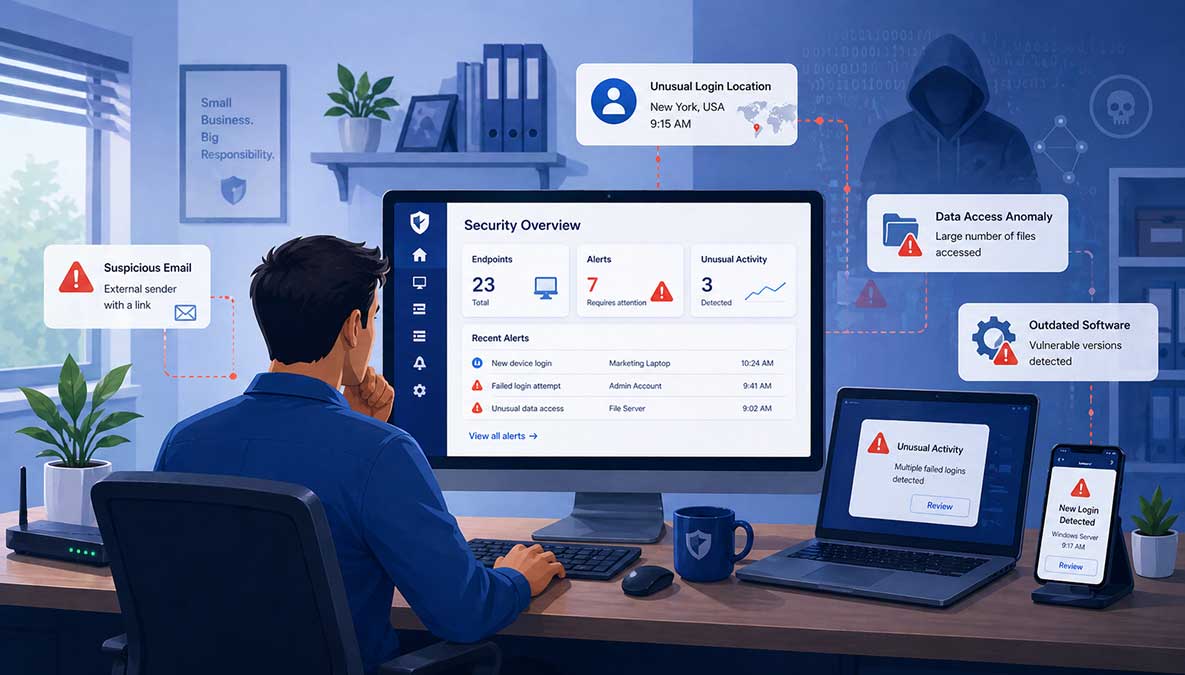
Artificial intelligence is not just a tool for businesses trying to work more efficiently. It has also become a powerful resource for cybercriminals. In recent months, security experts have warned about a new category of risk known as "shadow AI." This term refers to the hidden use of artificial intelligence by attackers, often in ways that traditional security defenses were never designed to handle.
So what does shadow AI actually look like in practice? One of the most common uses is in phishing campaigns. Attackers can now generate emails that read like they were written by a real person, complete with natural language, personalized details, and convincing formatting. These messages can be much harder to spot than the clumsy, error-filled attempts people are used to ignoring. For small businesses and nonprofits, this raises the likelihood that someone might accidentally click on a malicious link or share information with the wrong person.
Shadow AI also shows up in the automation of attacks. In the past, a criminal might need to spend hours writing code or searching for vulnerabilities. Now, AI tools can scan systems, test different approaches, and even adapt when they fail, all with minimal human involvement. This means that what once took days or weeks can happen in minutes. For organizations without dedicated IT staff, the speed of these attacks can be especially concerning.
Another risk is impersonation. AI can mimic writing styles, voices, and even video. That makes it easier to create fake messages that appear to come from a trusted colleague, manager, or partner. In some cases, attackers have used these techniques to trick employees into transferring money or sharing sensitive files.
It is easy to feel overwhelmed by these developments, but small businesses are not powerless. A few thoughtful steps can help reduce exposure. Encouraging employees to double-check requests that involve money or sensitive information, even if they appear to come from leadership, can stop impersonation attempts in their tracks. Updating systems regularly makes it harder for automated attacks to succeed. And providing a culture where people feel comfortable asking questions or reporting suspicious activity helps catch problems early.
Shadow AI may sound like a challenge that only large corporations can handle, but it affects everyone. The same qualities that make small organizations agile and community-focused can also make them targets. By staying aware of how attackers are evolving and taking simple, consistent steps, small businesses and nonprofits can protect themselves while continuing to focus on the work that matters most.
Sponsored
Start your 14-day free trial and get visibility into your devices in minutes, no IT team required.
 Ben Loveless
Co-founder and Developer
Ben Loveless
Co-founder and Developer