Many small organizations operate on networks that are surprisingly simple. A router connects the office to the internet. A few switches distribute connectivity to workstations. Employees use laptops, desktops, and cloud services to run the business.
For companies with five to fifty employees, this environment can feel manageable. It often grows organically as the business expands. New computers are added when employees join. Cloud applications are adopted as needed. Over time the network becomes a mix of devices, services, and accounts that support day to day work.
From a cybersecurity perspective, however, the simplicity of a small network can be deceptive. The number of devices may be limited, but the exposure to modern threats is the same as it is for much larger organizations.
Effective cybersecurity for small networks is not about replicating enterprise level infrastructure. It is about protecting the key points where attacks actually occur.
Small and medium sized businesses face many of the same threats as large enterprises. Phishing campaigns, ransomware, credential theft, and malware distribution are all common. The difference is that SMB environments often lack dedicated security teams and complex monitoring tools.
Because of this, attackers frequently view smaller organizations as accessible targets.
The goal of cyber security for SMB networks is therefore straightforward. Reduce the most common entry points for attackers and ensure that threats can be detected and contained quickly if they appear.
For most organizations in the 5 to 50 employee range, the most important controls focus on endpoints, identity, and visibility.
The devices employees use every day represent the largest attack surface in small networks.
Laptops, desktops, and servers are where email is opened, files are downloaded, credentials are entered, and applications are executed. When a cyberattack succeeds, it almost always begins on one of these devices.
This is why modern cybersecurity for small networks places heavy emphasis on endpoint protection.
Effective endpoint security should include:
With these protections in place, a compromised workstation can often be contained before it spreads to other systems.
Many small network breaches occur through stolen credentials rather than technical exploits.
Phishing emails remain one of the most common attack methods. An employee enters their password on a fraudulent login page, and attackers immediately attempt to access cloud services or remote systems.
Strong identity controls dramatically reduce this risk.
At a minimum, small networks should enforce:
These controls prevent a single compromised password from granting broad access to the network.
Sponsored
Knowing what to do is only half the battle; actually keeping systems updated, monitored, and protected is where most small businesses fall behind. That's why we built Simplified Solutions.
Instead of juggling tools or relying on manual processes, you can protect every device, stay up to date automatically, and get peace of mind without needing an IT team.
Another important component of cybersecurity for small networks is consistent patching.
Operating systems and applications regularly release security updates to fix vulnerabilities. Attackers often scan the internet for systems that have not yet installed those updates.
Automated patch management ensures that:
For SMB environments, automation is essential. Manual patching is easy to forget, especially when IT responsibilities are shared among several roles.
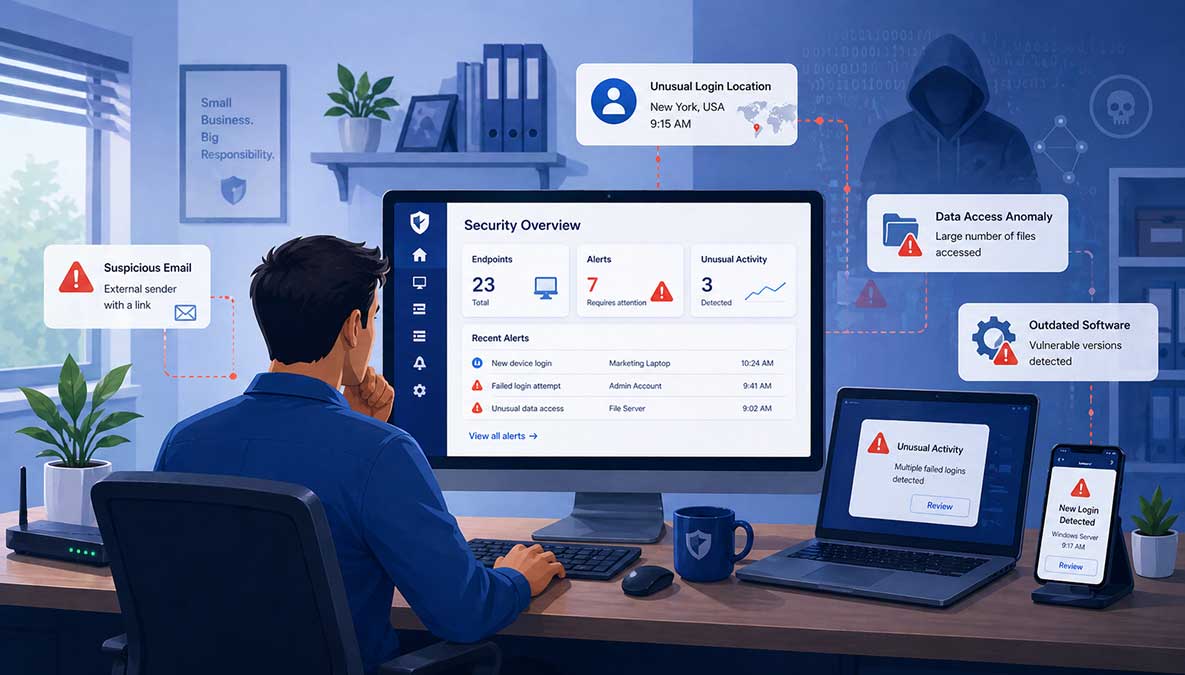
One challenge in small networks is that administrators often lack visibility into what is happening across all devices.
A workstation may have antivirus installed but no centralized reporting. A server may be updated occasionally but not monitored for suspicious activity. Alerts may appear on individual machines without anyone noticing them.
Centralized management platforms address this problem by bringing device information into a single dashboard.
From a security perspective, visibility allows organizations to answer important questions quickly:
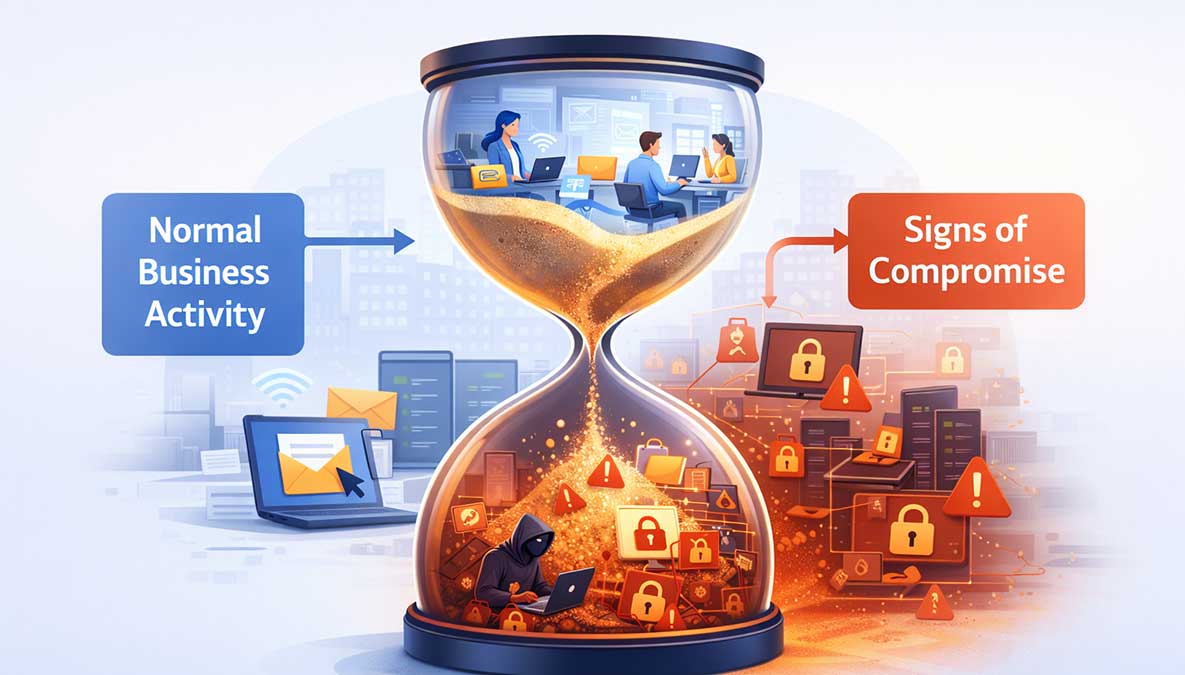
Without this visibility, problems often remain unnoticed until they disrupt operations.
Even well protected networks can experience incidents. For that reason, backup and recovery planning remains essential.
Reliable backups ensure that businesses can recover from ransomware, accidental deletion, or hardware failure without permanent data loss.
A good backup strategy typically includes:
Backups do not prevent attacks, but they greatly reduce the long term impact.
Technology alone cannot prevent every incident. Employees play an important role in cybersecurity for small networks.
Short, practical training sessions can help employees recognize suspicious emails, unusual login requests, or unexpected downloads.
Training should focus on simple patterns rather than technical jargon. Employees should know how to pause when something feels unusual and how to report potential issues quickly.
In many cases, early reporting allows security teams to stop an attack before it spreads.
Organizations with five to fifty employees occupy an interesting space in the technology landscape. They are large enough to depend heavily on digital systems, but often small enough that IT responsibilities are shared among a few people.
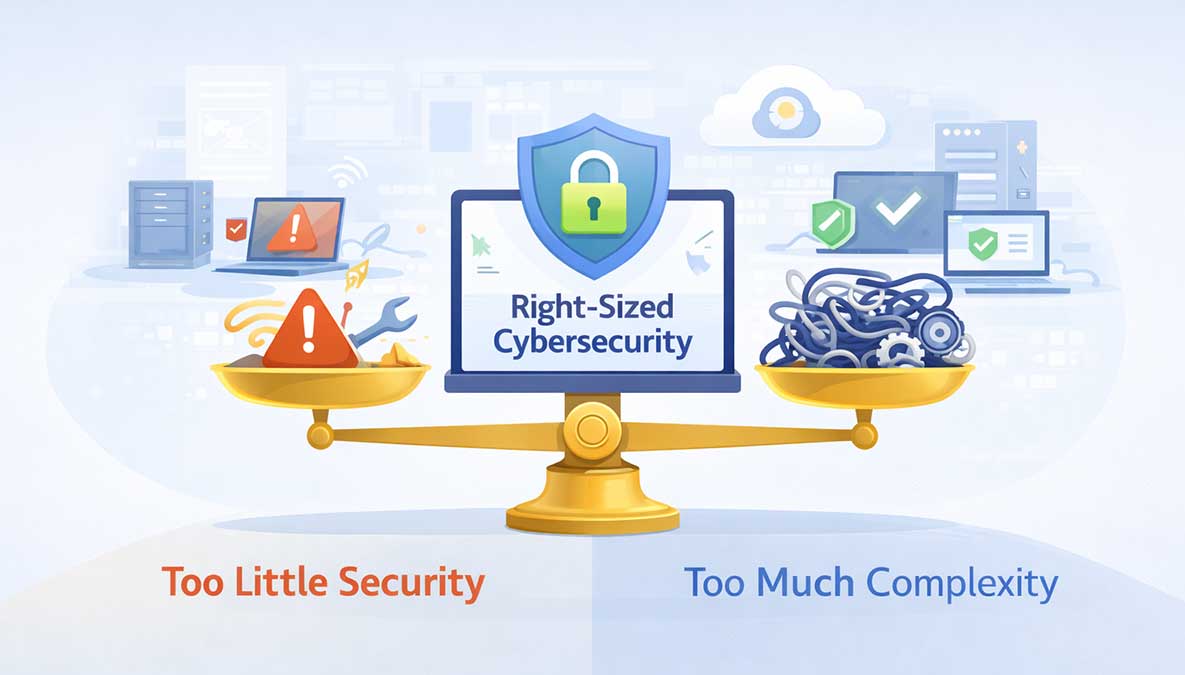
The goal of cyber security for SMB environments is therefore practicality. Security measures should reduce risk without introducing unnecessary complexity.
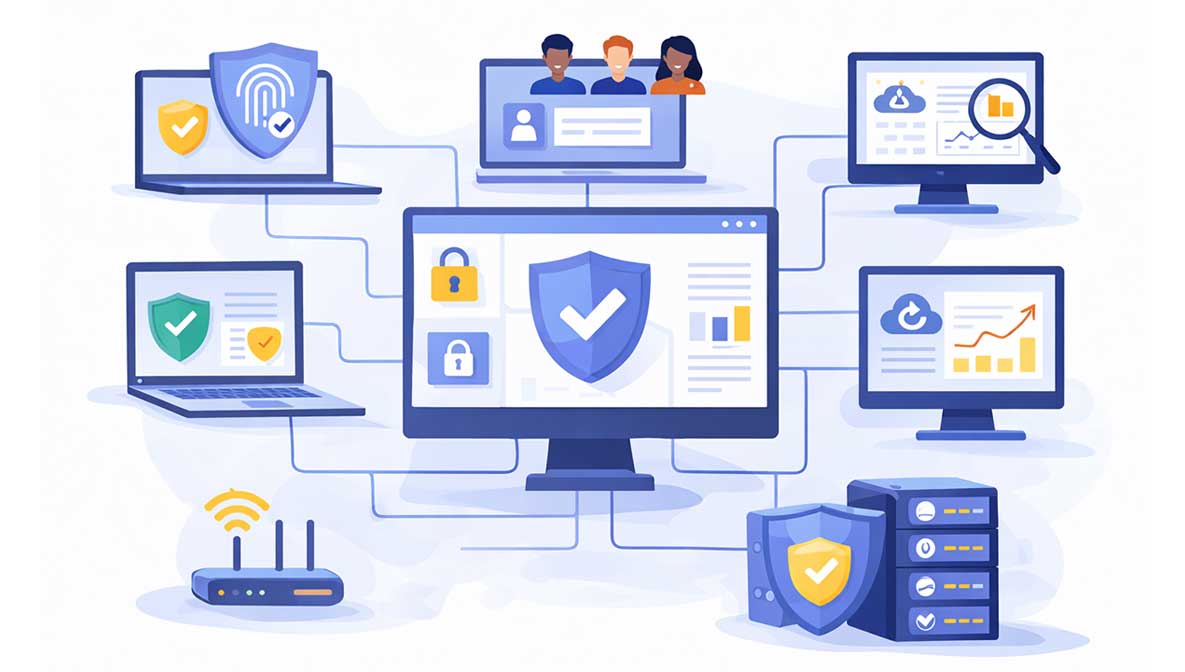
When small networks focus on endpoint protection, identity security, patch management, centralized visibility, and reliable backups, they address the majority of common attack paths.
These fundamentals create a resilient foundation that allows businesses to operate confidently even as cyber threats continue to evolve.
Sponsored
Start your 14-day free trial and get visibility into your devices in minutes, no IT team required.
 Ben Loveless
Co-founder and Developer
Ben Loveless
Co-founder and Developer