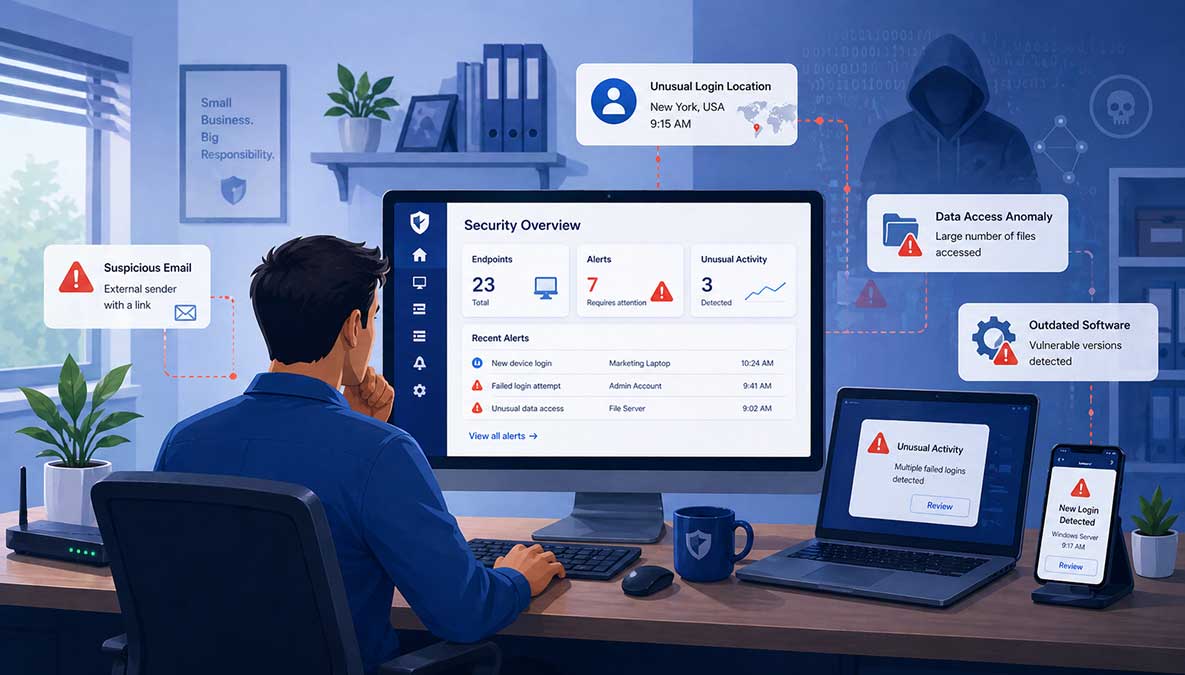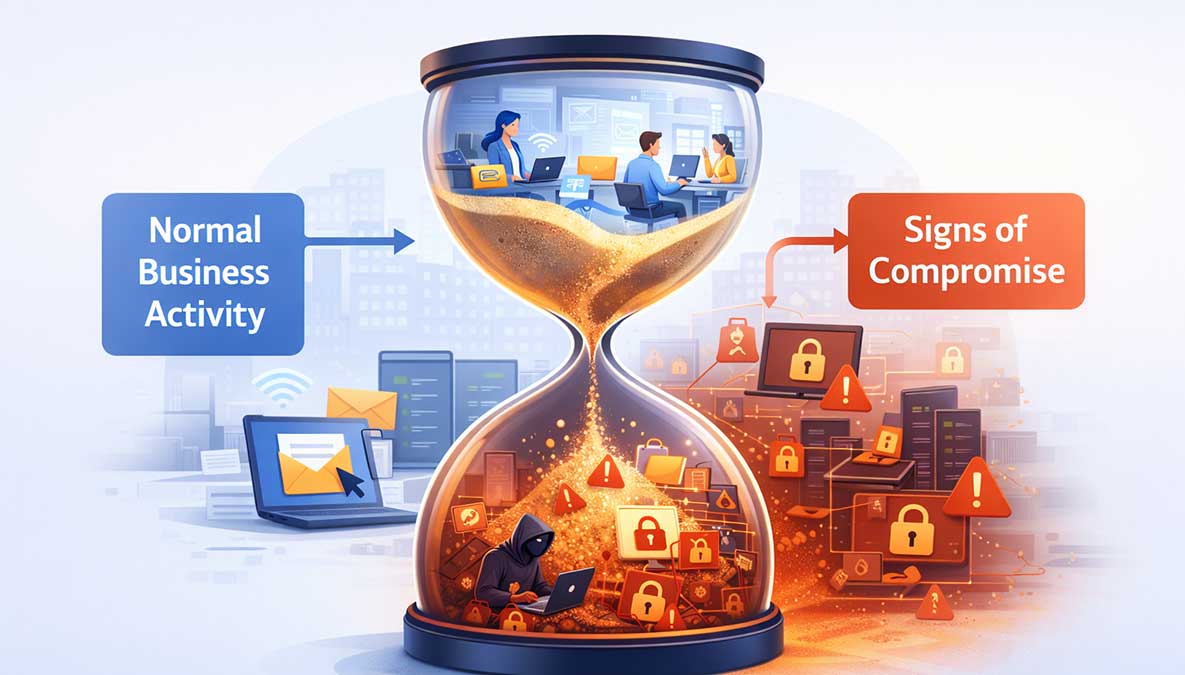
Most cyberattacks against small businesses do not begin with a dramatic event. There is no immediate outage or visible warning. Instead, they unfold quietly, often starting with something that looks routine.
Understanding how these attacks actually progress is one of the most effective ways to reduce risk. When you can recognize the stages, you are more likely to detect problems early or prevent them entirely.
This breakdown follows a typical attack path seen in many small business environments today.
The attack usually begins with access to a single device or account.
Common entry points include:
Many of these attacks are now assisted by AI tools, which allow attackers to generate convincing emails and scan for vulnerabilities at scale.
At this stage, nothing appears broken. The attacker has access, but the business continues operating normally.
Once inside, the attacker works to maintain access.
This may involve:
The goal is persistence. Even if the original access point is closed, the attacker wants a way back in.
This activity is often difficult to detect without endpoint-level monitoring.
After securing access, the attacker begins exploring the environment.
They look for:
During this phase, attackers often attempt to expand their access by capturing additional credentials. This allows them to move beyond the initial system.
In many cases, this step happens slowly to avoid detection.
With additional access, the attacker begins moving through the network.
This may involve:
Because many small networks lack centralized visibility, this movement can go unnoticed.
At this point, the attacker may already have access to critical systems, even though the original compromise started with a single device.
Once the attacker has reached their target systems, they execute their objective.
This could include:
Ransomware is one of the most common outcomes, especially in small business environments.
When this happens, the attack becomes visible. Files are locked, systems fail, and employees can no longer perform their work.
Sponsored
Most small businesses assume they're too small to be targeted, until something goes wrong. The reality is that modern threats don't discriminate, and staying protected requires constant attention. That's where Simplified Solutions comes in.
Instead of reacting to problems after they happen, you can proactively protect your devices, detect threats early, and stay secure without adding complexity to your day.
This is the stage where the impact becomes unavoidable.
Common effects include:
Even if backups exist, recovery takes time. Systems must be restored, verified, and secured before normal operations resume.
As discussed in The Real Cost of a Cyberattack, the financial and operational impact often extends far beyond the initial incident.
Once the attack is identified, the business must respond.
This typically involves:
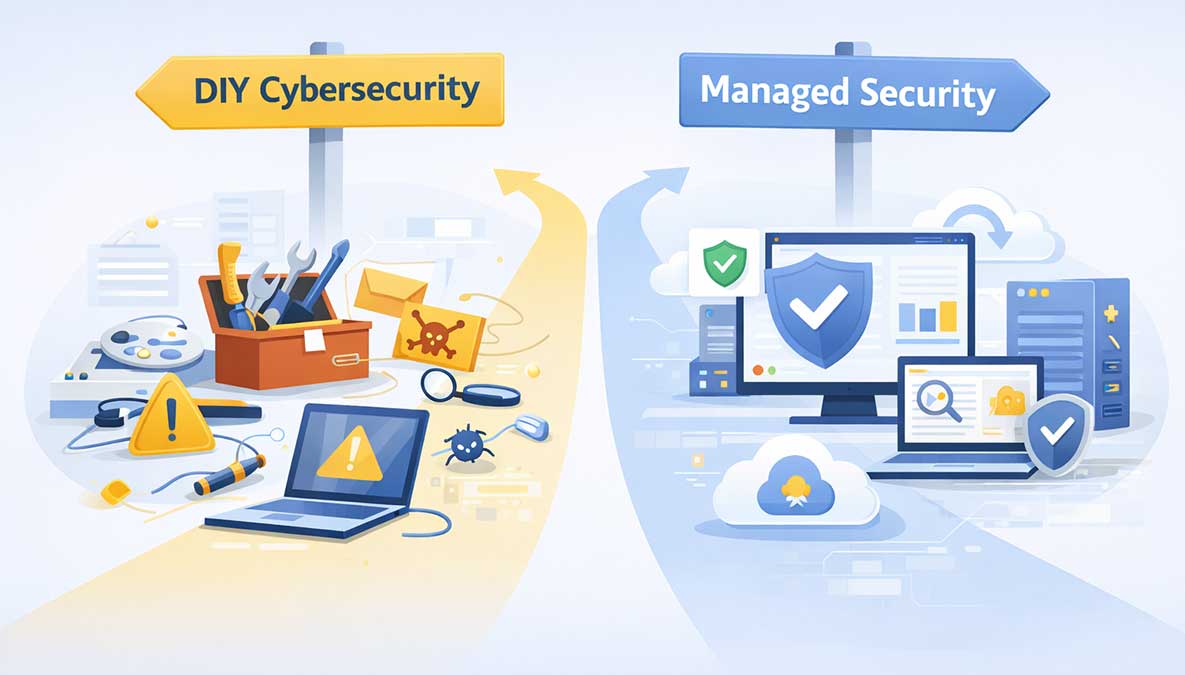
External support is often required at this stage, especially if the organization does not have in-house expertise.
Recovery is not just about restoring systems. It is about ensuring the attacker no longer has access.
Even after systems are restored, the effects of the attack can continue.
Businesses may face:
For small organizations, this stage can be just as challenging as the attack itself.
Cyberattacks are becoming more common in small businesses for a simple reason: they are efficient.
AI-driven tools allow attackers to automate:
This increases the volume of attacks while reducing the effort required.
Small businesses are not targeted individually in many cases. They are included in wide-scale campaigns designed to find the easiest points of entry.
Looking at this breakdown, a pattern becomes clear.
Most attacks succeed because of gaps in a few key areas:
These are the same fundamentals covered in our Step-By-Step Protection Plan.
If those controls are in place and actively managed, many attacks are stopped early, often before they reach later stages.
If you step back and look at the full process, it reinforces a core idea.
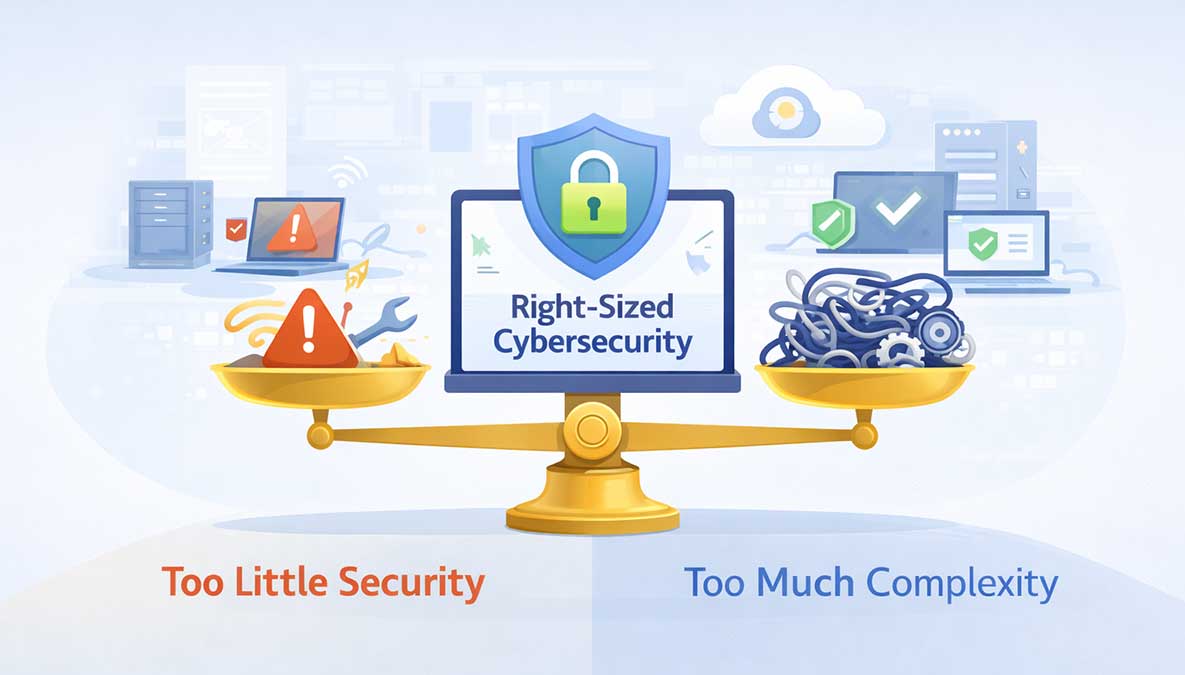
Cybersecurity for small businesses is not about stopping every possible threat. It is about interrupting the attack at multiple stages.
As explained in our Plain-English Guide for Small Businesses, endpoints are the primary risk surface. That is where attacks begin, and that is where early detection is most effective.
A cyberattack is not a single event. It is a sequence.
The earlier that sequence is interrupted, the smaller the impact.
Most businesses that experience major disruptions were not lacking tools. They were lacking visibility, consistency, or response.
Understanding how attacks unfold is the first step toward preventing them.
Sponsored
Start your 14-day free trial and get visibility into your devices in minutes, no IT team required.
 Ben Loveless
Co-founder and Developer
Ben Loveless
Co-founder and Developer