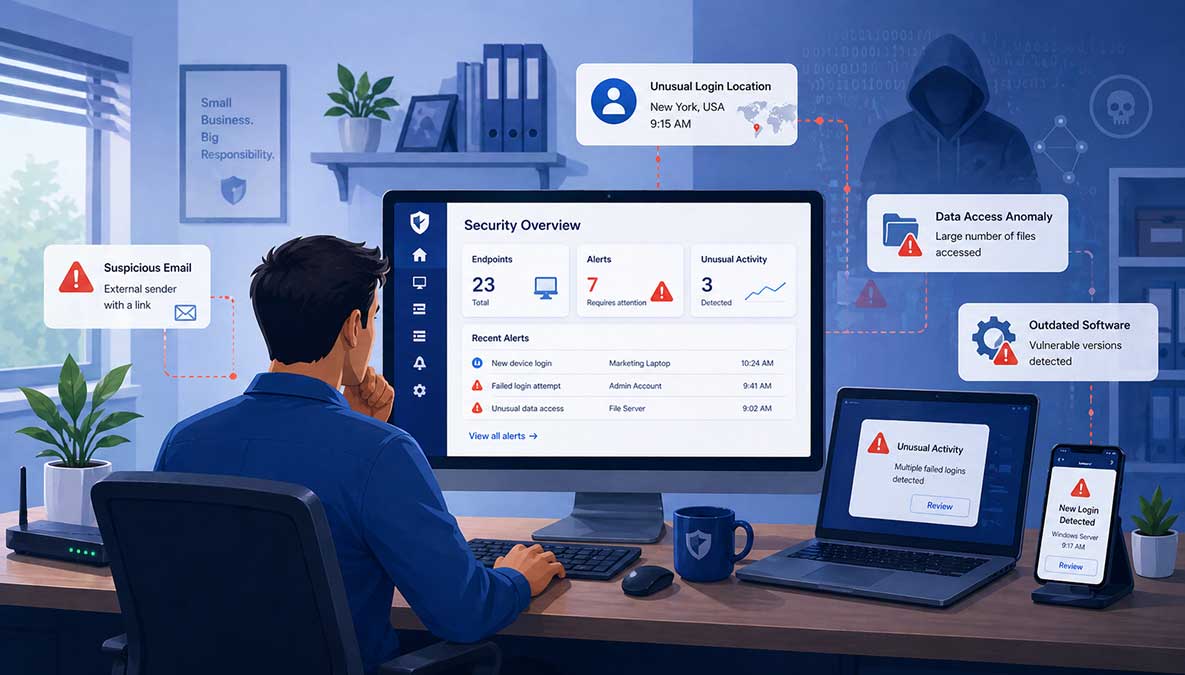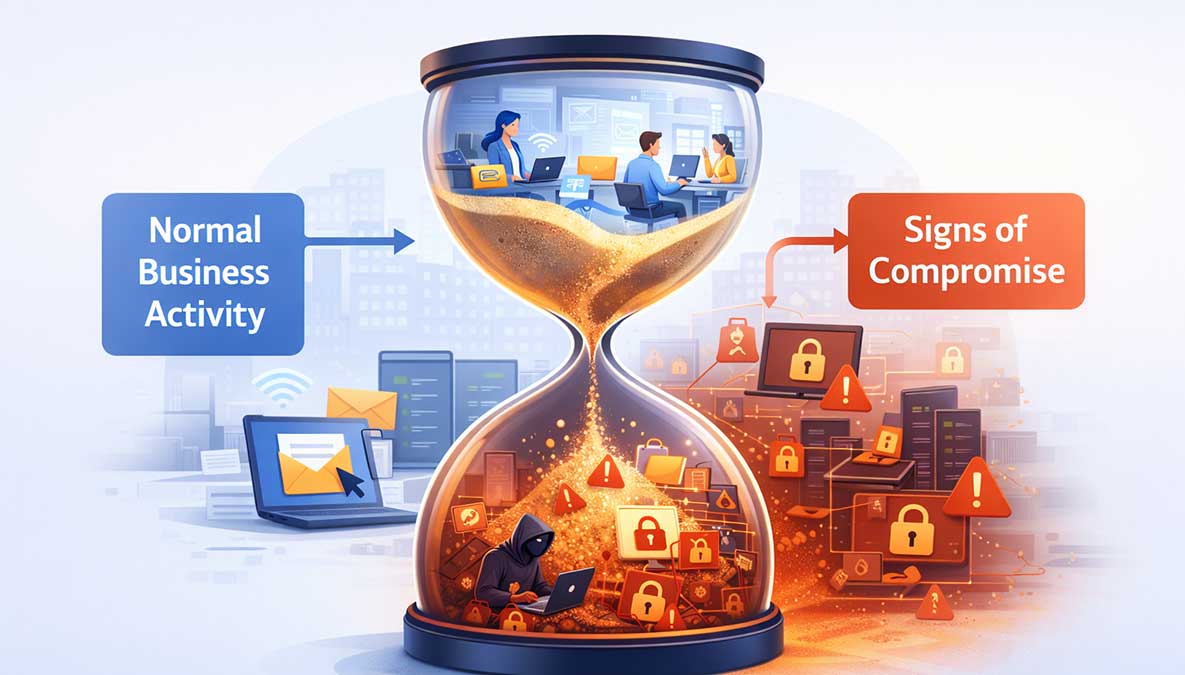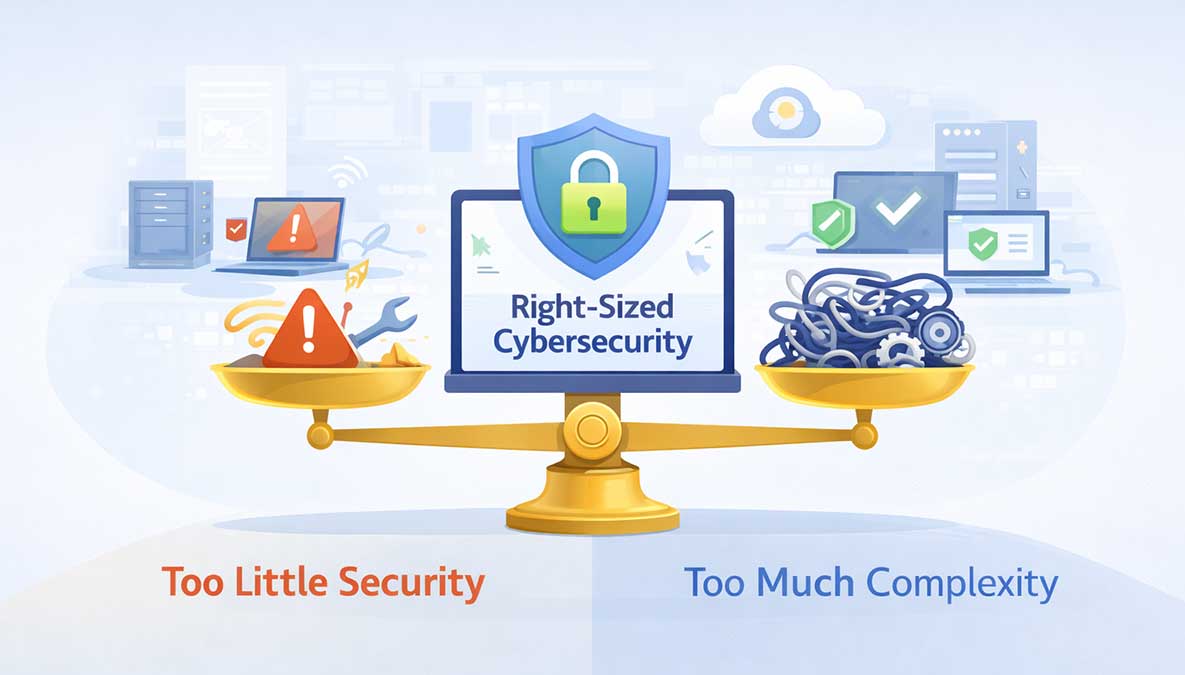
Small businesses are not being ignored by cybercriminals. They are being targeted deliberately and consistently.
Recent cybersecurity small business statistics show a clear pattern. Nearly half of all cyber attacks now target small and medium sized businesses. According to widely cited industry research, over 40 percent of data breaches involve organizations with fewer than 500 employees. Ransomware groups increasingly focus on smaller companies because they are less likely to have dedicated security teams and more likely to pay quickly to resume operations.
These are not isolated incidents. They represent a shift in attacker strategy.
If you run a small business, you are no longer "too small to notice." You are more likely to be seen as accessible.
Let's look at the data.
These cybersecurity small business statistics tell a consistent story. Attackers are not focused only on Fortune 500 companies. They are focused on return on effort.
Smaller organizations frequently lack advanced monitoring, formal response plans, and layered defenses. From an attacker's perspective, that means less resistance.
There are several reasons cyber attacks on small businesses statistics continue to trend upward.
1. Limited Security Resources
Many SMBs do not employ full-time security staff. IT responsibilities are often handled by a generalist, outsourced provider, or even a technically inclined employee. Attackers understand this reality.
2. Increased Use of Cloud and Remote Work
Small businesses rely heavily on cloud services, remote access tools, and collaboration platforms. These tools are powerful but expand the attack surface. A stolen password can open doors quickly.
3. Automation and AI Lower the Barrier
Artificial intelligence has changed the economics of cybercrime. Attackers can now automate phishing campaigns, generate convincing emails that mimic writing styles, and scan for vulnerabilities at scale. This means more targets can be hit with less effort.
The rise in cyber attacks on small businesses statistics is closely tied to this automation trend. Smaller companies are swept into wide-net campaigns that require minimal customization.
4. Assumption of Safety
Perhaps the most dangerous factor is psychological. Many small business owners believe they are unlikely targets. That belief delays investment in basic controls, leaving systems exposed longer than they should be.
Sponsored
Knowing what to do is only half the battle; actually keeping systems updated, monitored, and protected is where most small businesses fall behind. That's why we built Simplified Solutions.
Instead of juggling tools or relying on manual processes, you can protect every device, stay up to date automatically, and get peace of mind without needing an IT team.
Most incidents affecting SMBs follow familiar patterns.
These attacks do not require advanced espionage capabilities. They exploit weak authentication, outdated software, and unmonitored endpoints.
If you have read our plain English guide, What Is SMB Cybersecurity?, you know that endpoints such as laptops, desktops, and servers are the primary risk surface. That is where most compromises begin.
The financial cost of a breach is only part of the story.
Small businesses often experience:
Unlike large enterprises, small organizations rarely have the cash reserves or insurance coverage to absorb prolonged disruption. This is why cybersecurity for small business owners is not just a technical concern. It is a business continuity issue.
The data may feel alarming, but there is an important counterpoint.
Most successful small business breaches involve basic gaps:
These are solvable problems.
The same cybersecurity small business statistics that show increased attacks also show that layered defenses dramatically reduce risk. When MFA is enabled, backups are tested, and endpoints are monitored, the majority of automated attacks fail.
Fear without direction is unhelpful. Awareness paired with a plan is powerful.
If this article has raised concern, that is appropriate. Small businesses are prime targets. But the solution is not panic. It is preparation.
Start by reviewing our Small Business Cybersecurity Checklist: A Step-by-Step Protection Plan for 2026. It walks through practical steps including password policy, MFA, endpoint protection, backups, email security, employee training, and incident response planning.
If you are unsure what SMB cybersecurity really means in practical terms, revisit our guide on What Is SMB Cybersecurity? A Plain-English Guide for Small Businesses. Understanding the fundamentals makes implementation far easier.
Cybercriminals are evolving. AI is accelerating attack speed and lowering the skill barrier. Automation is increasing volume. The rise in cyber attacks on small businesses statistics reflects these realities.
Small businesses are not helpless. They are simply required to be intentional.
The organizations that implement consistent security fundamentals are far less likely to become headline statistics. The ones that assume they are invisible are increasingly at risk.
The threat is real. The tools to defend against it are available. The difference is whether action is taken before or after an incident.
Sponsored
Start your 14-day free trial and get visibility into your devices in minutes, no IT team required.
 Ben Loveless
Co-founder and Developer
Ben Loveless
Co-founder and Developer