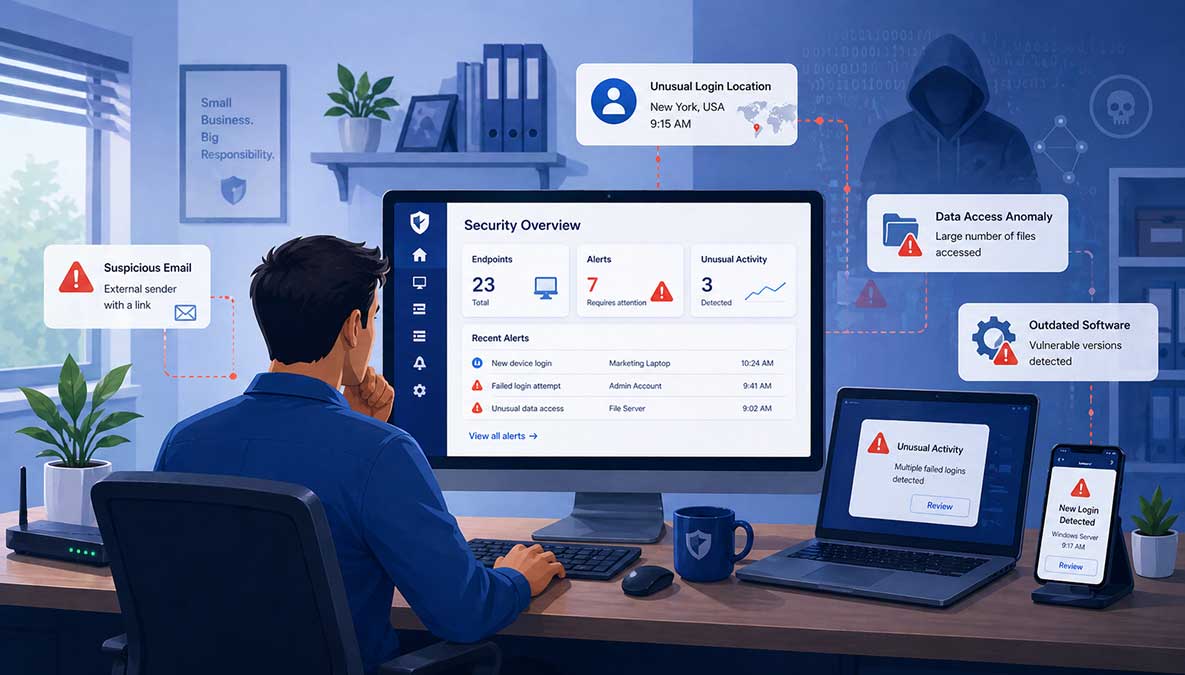
Most small business owners don't struggle with understanding that cybersecurity is important. The real challenge is knowing how much is actually necessary.
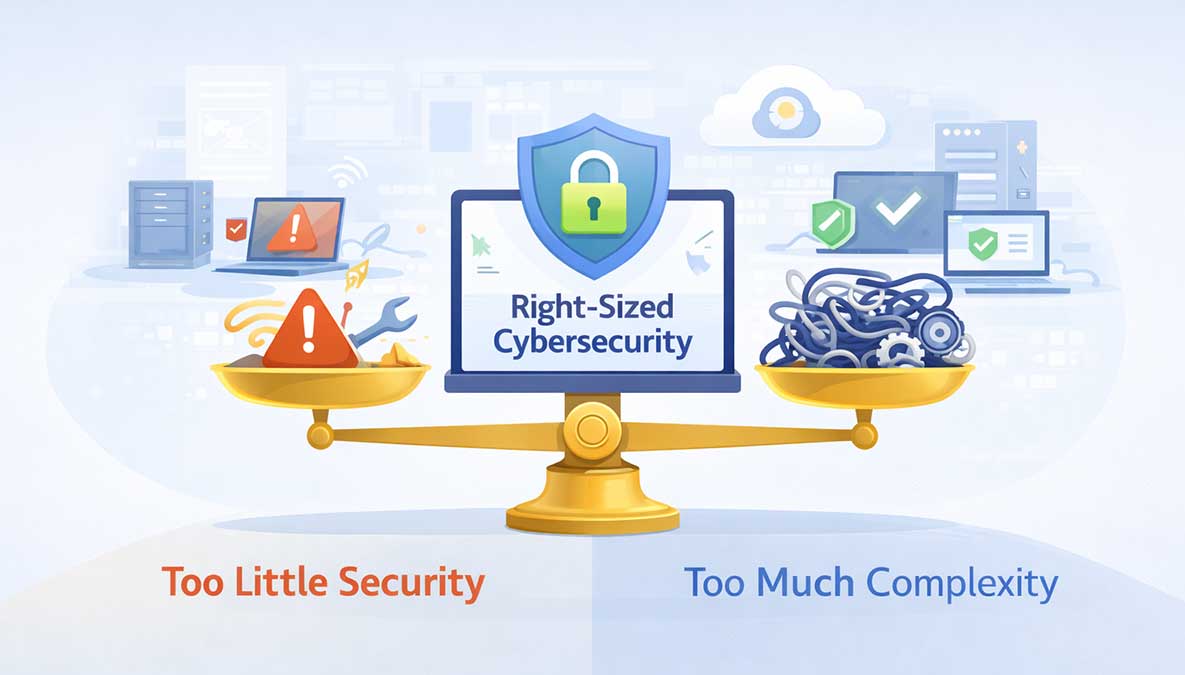
On one side, there is the fear of being under-protected. News stories and industry reports highlight increasing cyber attacks, many of which now use AI to automate phishing, scan for vulnerabilities, and target businesses at scale. It is easy to feel like you need enterprise-grade security to stay safe.
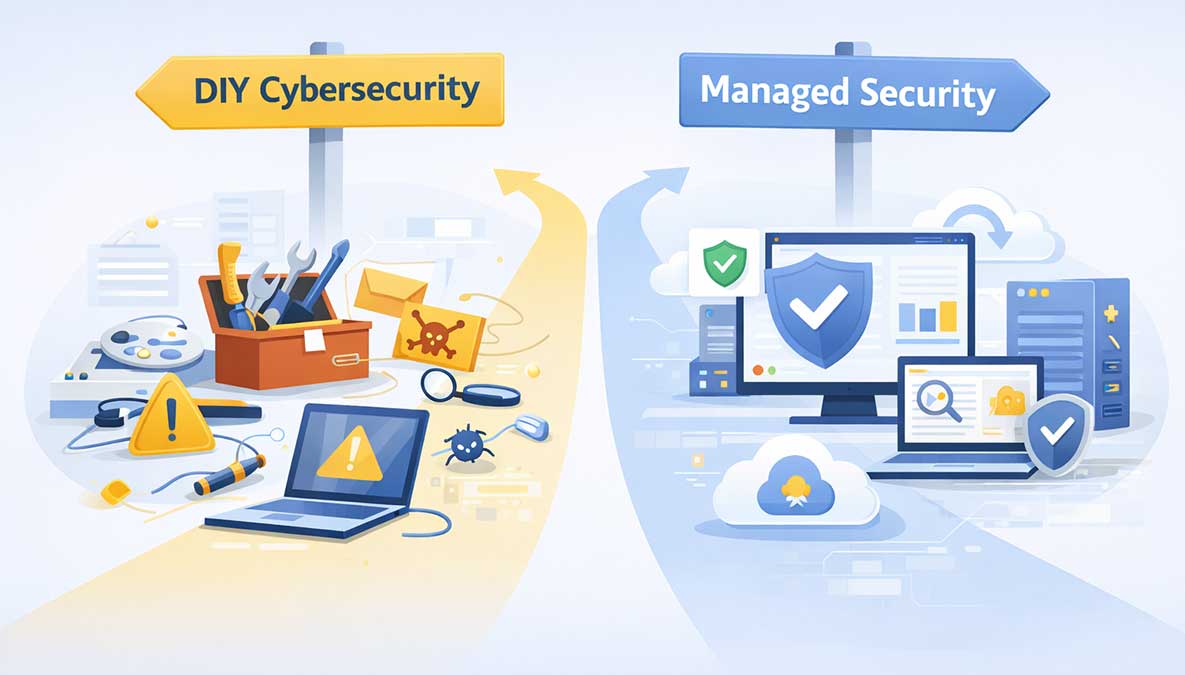
On the other side, there is the risk of overcomplicating things. Many cybersecurity solutions are designed for large organizations with dedicated teams, complex infrastructure, and time to manage it all.
Most small businesses fall somewhere in between. They need protection that is strong enough to stop common threats, but simple enough to run consistently.
One of the most common misconceptions is that cybersecurity is about building the most advanced defense possible.
For small businesses, that is not the goal.
The goal is to reduce risk to a manageable level, using controls that are reliable and sustainable. Security that is too complex often becomes inconsistent. Inconsistent security is where problems begin.
To understand how much cybersecurity you need, it helps to understand where risk actually comes from.
Most successful attacks against SMBs involve:
As explained in our article explaining cybersecurity for small businesses, these attacks typically begin on endpoints such as laptops, desktops, and servers.
That means your level of protection should be based on how exposed those systems are, not on how complex your network is.
For most small businesses, the right level of cybersecurity includes a core set of protections that address the most common attack paths.
These are not advanced or optional controls. They are foundational.
1. Strong Authentication
Every business should enforce:
AI-driven phishing campaigns are becoming more convincing, which makes stolen credentials more likely. MFA is one of the simplest ways to reduce this risk.
2. Endpoint Protection on Every Device
Every workstation and server should be protected.
This includes:
Because most attacks begin on endpoints, this is one of the most important layers of protection.
3. Reliable Backups
Backups are your recovery plan.
They should be:
If ransomware or data loss occurs, backups ensure your business can recover without relying on attackers.
4. Basic Email Security
Email remains the most common entry point for attacks.
At a minimum, this includes:
Even with strong filtering, employees should still be cautious about unexpected requests.
5. Consistent Updates and Patch Management
Outdated systems are easy targets.
Software and operating systems should be updated regularly, ideally through automation. This reduces exposure to known vulnerabilities that attackers actively scan for.
6. Visibility Across Your Environment
You should be able to answer simple questions quickly:
Without visibility, small issues can grow into larger problems without being noticed.
Sponsored
Knowing what to do is only half the battle; actually keeping systems updated, monitored, and protected is where most small businesses fall behind. That's why we built Simplified Solutions.
Instead of juggling tools or relying on manual processes, you can protect every device, stay up to date automatically, and get peace of mind without needing an IT team.
Many small businesses assume they need:
These can be useful in certain environments, but they are not required for most organizations with 5 to 50 employees.
Overcomplicating security often leads to gaps, not improvements.
While overcomplication is a concern, under-protection is still the greater risk.
Without the fundamentals in place, small businesses are exposed to:
As outlined in our cybersecurity checklist, these risks can be significantly reduced with consistent implementation of core protections.
At the same time, trying to implement everything at once can backfire.
Too many tools create:
The result is often a system that looks secure on paper but is not actively maintained.
Instead of asking "how much cybersecurity do I need," a better question is:
Can my business consistently maintain the protections I have in place?
Effective cybersecurity is not about how many tools you install. It is about how reliably they operate over time.
For most SMBs, the right approach is:
This creates a strong baseline without unnecessary complexity.
If you implement the fundamentals well, you are already ahead of most small businesses.
From there, you can improve over time based on your specific needs, industry requirements, and risk tolerance.
The key is to start with what actually works, not what sounds impressive.
Cybersecurity for small businesses is not about matching enterprise defenses. It is about making smart, consistent decisions that reduce risk in real-world environments.
You do not need everything.
You need the right things, applied consistently.
Sponsored
Start your 14-day free trial and get visibility into your devices in minutes, no IT team required.
 Ben Loveless
Co-founder and Developer
Ben Loveless
Co-founder and Developer