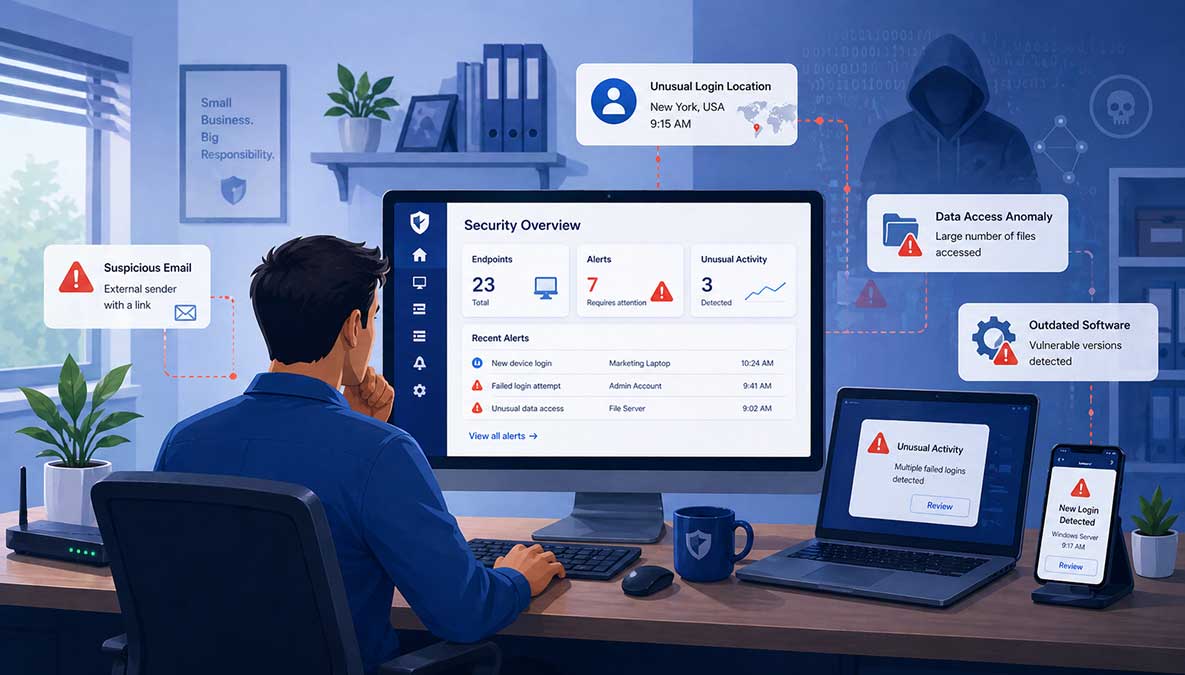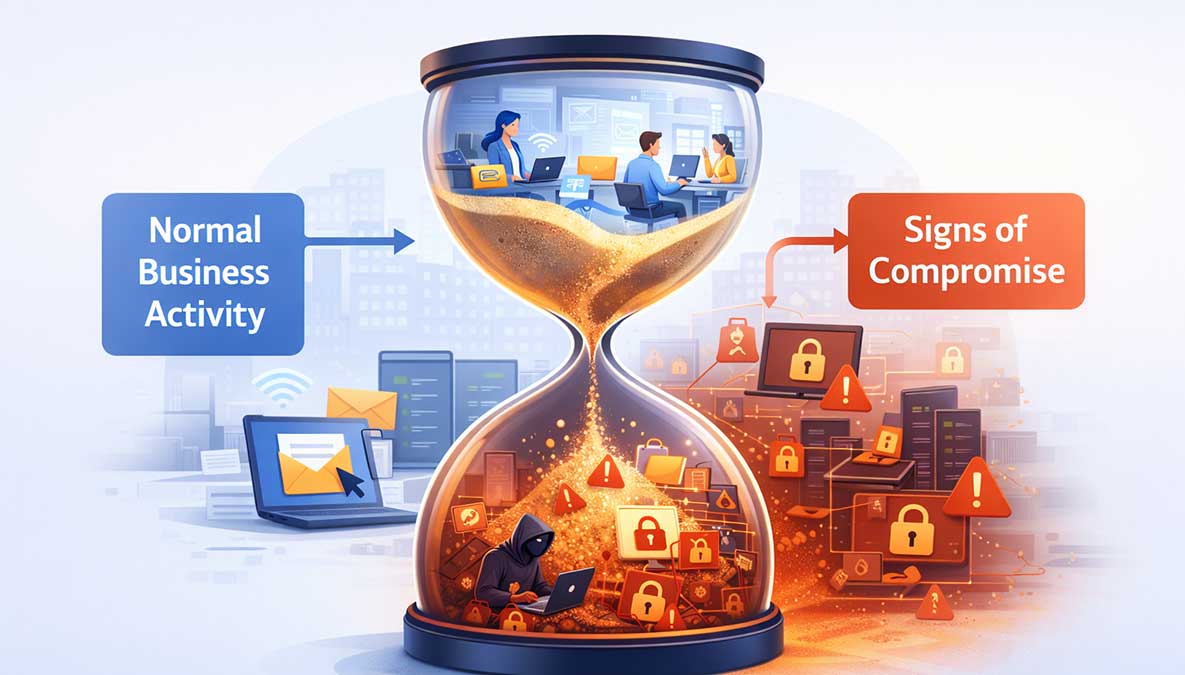
Cybersecurity risks for small businesses are increasing, and artificial intelligence is accelerating the trend. AI tools now allow attackers to generate convincing phishing emails, automate vulnerability scanning, and launch coordinated attacks at scale. What once required skilled operators and significant time can now be done quickly and cheaply. As a result, smaller organizations are becoming more common targets, not because they are high profile, but because they are reachable.
If you are looking for a practical small business cyber security checklist for 2026, this guide focuses on the fundamentals that matter most. These steps are realistic for small and medium sized businesses and provide meaningful protection without unnecessary complexity.
If you are new to the topic, you may also want to read our plain English guide on What Is SMB Cybersecurity, which explains how small business security differs from enterprise security and why endpoints are the primary risk surface.
Weak passwords remain one of the easiest ways for attackers to gain access. AI-powered tools can now test password combinations and credential stuffing attempts faster than ever.
Your password policy should require:
Password discipline is simple in concept, but powerful in practice. It closes one of the most common entry points for automated attacks.
If you implement only one item from this cyber security checklist for small business, make it multi-factor authentication.
MFA dramatically reduces the effectiveness of phishing and credential theft. Even if an AI-generated phishing email convinces an employee to enter a password, MFA adds another barrier.
Enable MFA on:
In 2026, operating without MFA is no longer a minor oversight. It is a major vulnerability.
Endpoints are the primary risk surface for small businesses. Laptops, desktops, and servers are where email is opened, files are downloaded, and applications are executed.
Modern endpoint protection should provide:
This is especially important as malware becomes more adaptive. AI-assisted threats can alter behavior and attempt to evade traditional signature-based antivirus. Behavioral detection is essential.
Every workstation and server, including cloud-hosted virtual machines, should be protected and monitored.
Sponsored
Most small businesses assume they're too small to be targeted, until something goes wrong. The reality is that modern threats don't discriminate, and staying protected requires constant attention. That's where Simplified Solutions comes in.
Instead of reacting to problems after they happen, you can proactively protect your devices, detect threats early, and stay secure without adding complexity to your day.
Backups are your safety net against ransomware and data loss.
Your small business cyber security checklist must include:
AI-driven ransomware campaigns are becoming more targeted and efficient. A strong backup strategy ensures that even if systems are encrypted, your business can recover without paying a ransom.
Backups are not optional. They are part of resilience planning.
Email remains the most common attack vector. AI now allows attackers to craft messages that closely match tone, writing style, and business context.
A strong email security approach includes:
Technical controls reduce risk, but awareness still matters. Encourage employees to verify unusual requests, especially those involving payments or sensitive data.
Cybersecurity for small business owners is not only about tools. It is also about habits.
Employee training should cover:
Training does not need to be complicated. Short, focused sessions once or twice per year can significantly improve resilience.
Even with strong defenses, incidents can occur. The difference between a disruption and a disaster often comes down to response time.
Your incident response plan should answer:
Having a plan reduces confusion and speeds containment. In an environment where AI can automate parts of an attack, rapid human response becomes even more important.
Unpatched vulnerabilities are low-hanging fruit for automated scanning tools. AI-assisted attackers can quickly identify and exploit outdated systems.
Automated patch management ensures that operating systems and third-party applications stay current. Consistent updates remove many opportunities before attackers can exploit them.
Small teams cannot manually monitor every system. Centralized visibility allows you to see:
This visibility allows proactive action rather than reactive cleanup.
Threats evolve. AI capabilities improve. Attack techniques shift.
At least once per year, review your:
Cybersecurity is an ongoing discipline, not a one-time project.
Small businesses are increasingly targeted because automation makes it profitable for attackers to cast a wider net. AI lowers the skill barrier and increases attack speed. The good news is that strong fundamentals still stop most incidents.
This small business cyber security checklist focuses on those fundamentals:
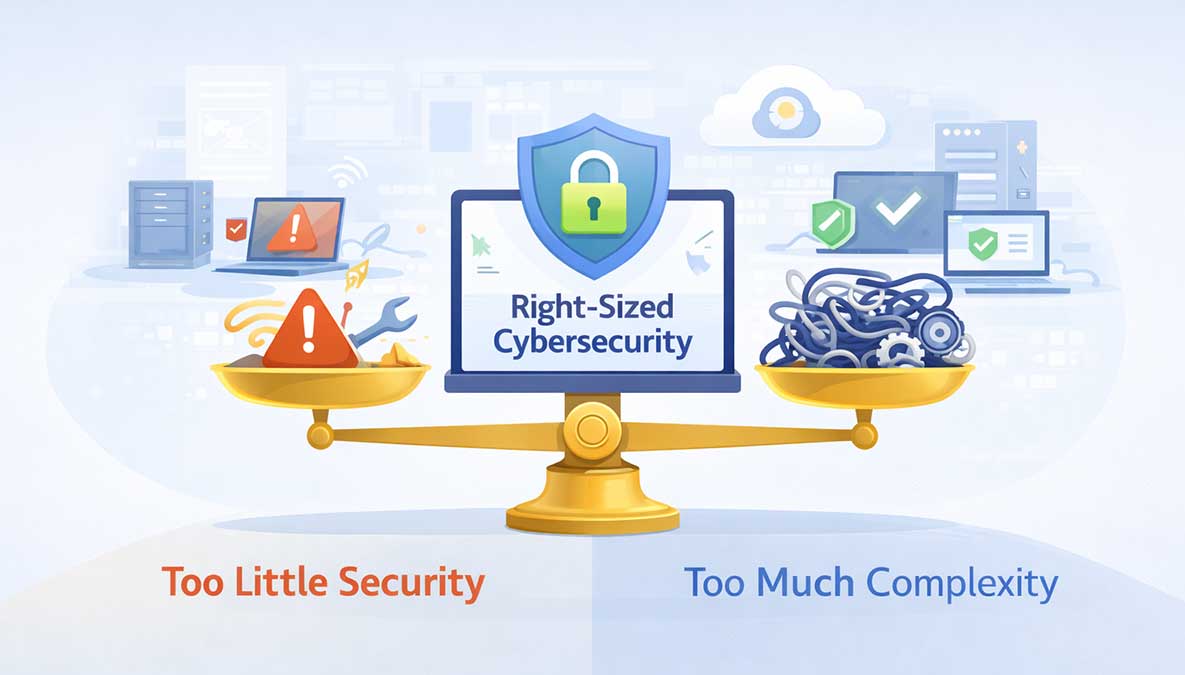
You do not need enterprise complexity. You need consistent execution.
Cybersecurity for small business owners is about reducing risk to a manageable level and ensuring that a single mistake does not become a business-ending event.
Start with the checklist. Build discipline. Improve over time.
Sponsored
Start your 14-day free trial and get visibility into your devices in minutes, no IT team required.
 Ben Loveless
Co-founder and Developer
Ben Loveless
Co-founder and Developer