When most people hear about ransomware or data breaches, the headline number usually focuses on the ransom demand. It might be twenty thousand dollars, fifty thousand dollars, or sometimes far more.
For small businesses, however, the ransom is often only a small part of the real cost.
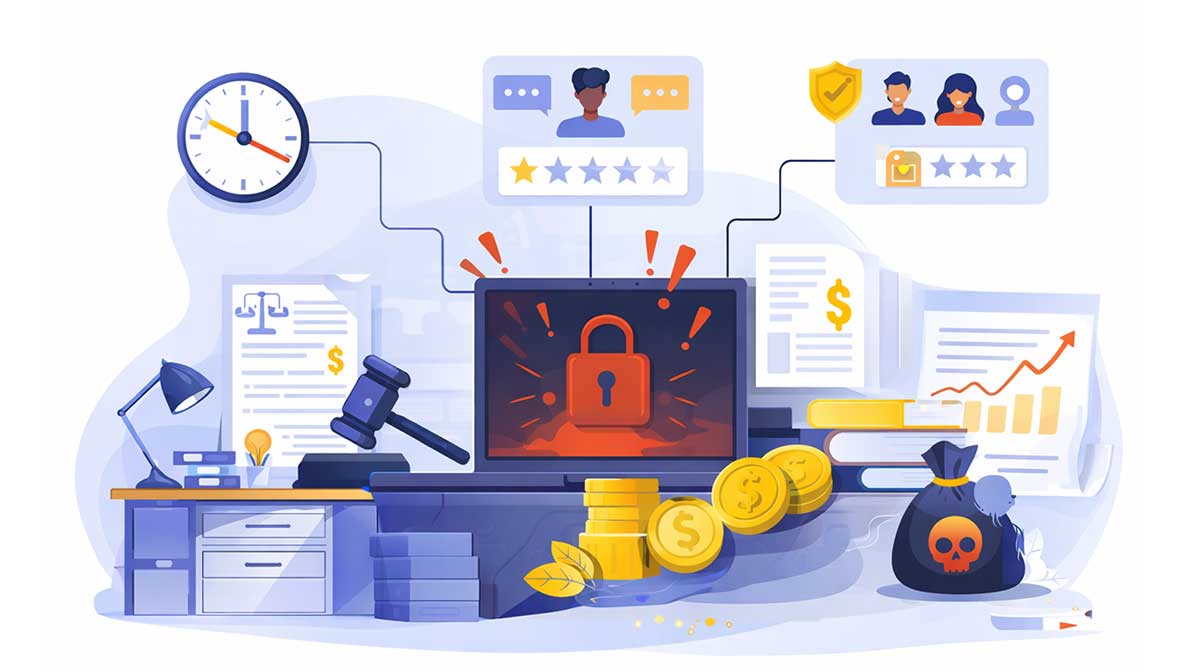
The true cyber attack impact on small business operations includes lost productivity, legal exposure, recovery expenses, insurance consequences, and long term damage to customer trust. These effects can ripple through an organization for months or even years.
Understanding these costs is one of the most effective ways to understand why cybersecurity matters.
Downtime is often the most immediate and expensive consequence of a cyber incident.
Consider a typical scenario. A company arrives at work on Monday morning and discovers that shared drives are inaccessible. Customer records cannot be opened. Accounting systems are offline. Email access is disrupted.
Even if backups exist, restoring systems can take time. During that period employees may be unable to perform their normal work.
For a small organization with ten or twenty employees, a single day of downtime can represent thousands of dollars in lost productivity. Projects stall. Customer requests go unanswered. Orders may be delayed or cancelled.
When ransomware is involved, downtime can stretch for several days or longer while systems are investigated and rebuilt.
The cost of a cyber attack small business owners experience is often measured first in lost operational capacity.
Ransomware attacks frequently involve demands ranging from a few thousand dollars to six figures. Many small businesses believe that paying the ransom will resolve the situation quickly.
In reality, the ransom payment is only one part of the expense.
Even after a payment is made, organizations often need to:
Security professionals are usually required to perform forensic analysis and remediation work. These services can cost thousands of dollars depending on the scope of the incident.
Some organizations also discover that attackers left additional backdoors in place, requiring deeper system cleanup.
In other words, paying the ransom rarely ends the process. It only begins recovery.
If sensitive data is involved, legal costs can quickly follow.
Small businesses that store customer information, financial records, or employee data may be subject to privacy regulations. When a breach occurs, those regulations often require formal notification procedures.
Legal support may be needed to determine:
Depending on the industry, regulatory investigations or compliance reviews may follow. These steps protect customers but add additional cost and administrative burden.
The cyber attack impact on small business operations can therefore extend into areas that have nothing to do with technology.
Sponsored
Even when you know what needs to be done, keeping up with updates, monitoring, and security tools can quickly become overwhelming. That's why we created Simplified Solutions.
Instead of spending hours managing devices and worrying about what you might have missed, you can automate protection, streamline maintenance, and focus on running your business.
Cyber insurance has become more common in recent years, but it does not eliminate risk.
When a claim is filed after an attack, insurance carriers may increase premiums during the next renewal period. Some policies also include deductibles or coverage limits that leave part of the expense with the business.
In certain cases, organizations that experience repeated incidents may even struggle to maintain coverage.
Insurance can help absorb some costs, but it does not erase the financial consequences of an attack.
One of the most difficult costs to measure is reputational damage.
Customers expect their information to be handled responsibly. When a breach occurs, even if it is resolved quickly, trust can erode.
A professional services firm that loses client data may face uncomfortable questions about its internal controls. An online retailer that experiences repeated outages may lose customers to competitors.
These impacts may not appear immediately on a balance sheet, but they influence long term business growth.
For small businesses that depend heavily on relationships and referrals, reputation is often one of their most valuable assets.
What makes cyber incidents particularly damaging is that these costs rarely occur in isolation.
A single event can trigger:
When combined, the total cost of a cyber attack small business owners face can easily exceed the original ransom demand.
Industry research consistently shows that many small businesses struggle to recover from significant cyber incidents because the financial and operational burden arrives all at once.
Cybercriminals understand these dynamics. They know that small organizations often lack dedicated security teams and may feel pressure to restore operations quickly.
This makes smaller companies appealing targets.
If you want to understand why attackers focus on SMBs, our article What Is SMB Cybersecurity? A Plain-English Guide for Small Businesses explains how small and medium sized businesses fit into the modern threat landscape and why endpoint protection is so important.
Most attacks begin on everyday devices such as laptops, desktops, or servers. Protecting those endpoints is often the first and most effective line of defense.
The most important lesson from cyber attack case studies is simple. Prevention is far less expensive than recovery.
Strong cybersecurity fundamentals significantly reduce risk. These include:
These measures do not eliminate every threat, but they dramatically reduce the chances that a small mistake becomes a major incident.
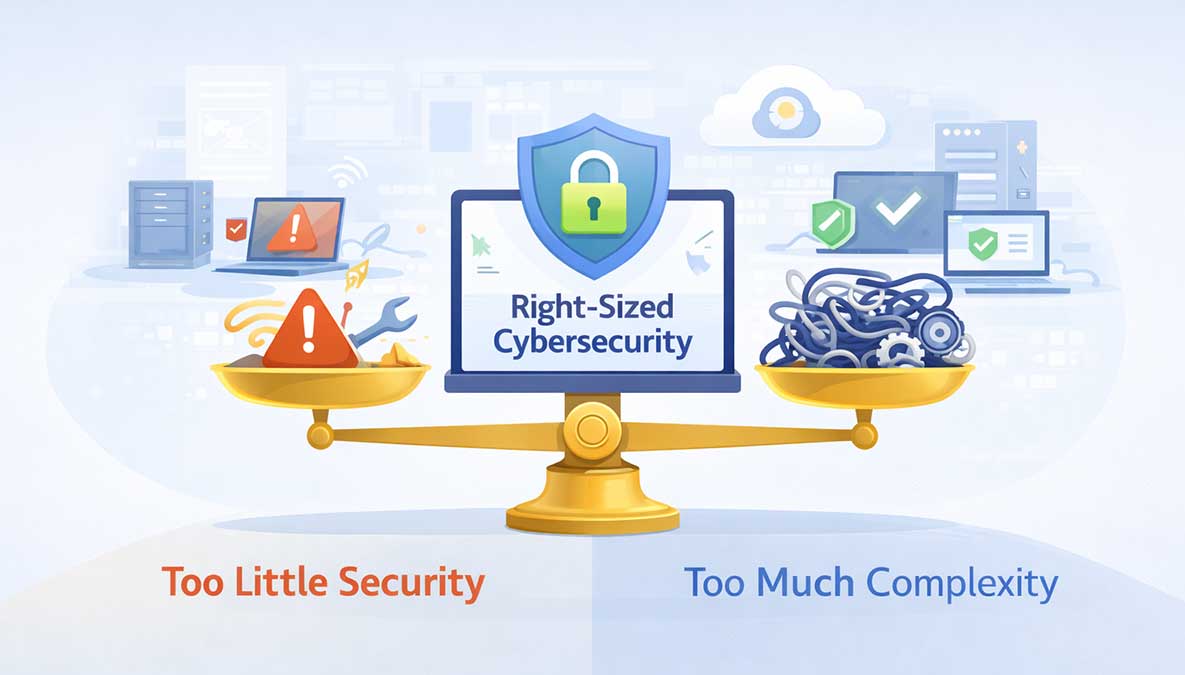
Small business owners are often forced to weigh competing priorities. Technology investments must be balanced against other operational needs.
When viewed through the lens of risk, cybersecurity becomes easier to evaluate.
The question is not whether cybersecurity costs money. The question is whether the cost of prevention is lower than the cost of recovery.
For most organizations, the answer is clear.
Understanding the cyber attack impact on small business operations helps turn cybersecurity from an abstract concern into a practical business decision.
Protecting systems, employees, and customer data is ultimately about protecting the continuity of the business itself.
Sponsored
Start your 14-day free trial and get visibility into your devices in minutes, no IT team required.
 Ben Loveless
Co-founder and Developer
Ben Loveless
Co-founder and Developer