Small businesses have more cybersecurity options than ever before. New tools, platforms, and services are introduced every year, many promising complete protection with minimal effort.
At the same time, cyber threats are becoming more automated, more convincing, and more frequent. Artificial intelligence is allowing attackers to scale phishing campaigns, generate realistic messages, and identify vulnerabilities faster than ever.
This creates a challenge for business owners. With so many options available, what actually works?
If you are searching for the best cybersecurity for small businesses, the answer is not a single product. It is a combination of practical controls that work together to reduce risk in real-world environments.
The best cyber security for small business environments is not the most complex system or the most expensive platform. It is the set of tools and processes that:
As explained in our plain-English guide to SMB cybersecurity, small and medium sized businesses operate differently than large enterprises. Solutions must be effective without requiring a full-time security team.
This means focusing on the fundamentals that stop the majority of attacks.
Every cybersecurity strategy for a small business starts with endpoints.
Laptops, desktops, and servers are where users interact with email, download files, and access systems. That makes them the most common entry point for attacks.
The best cybersecurity solutions include modern endpoint protection that goes beyond traditional antivirus.
Key capabilities include:
In 2026, signature-based antivirus alone is no longer sufficient. Effective endpoint protection must be able to detect unknown threats based on behavior.
Credential theft remains one of the most common causes of breaches.
Phishing emails, many of which are now generated or enhanced using AI, are designed to capture login credentials. Once attackers have a valid username and password, they often gain immediate access.
Multi-factor authentication is one of the simplest and most effective defenses.
When MFA is enabled, a stolen password is not enough. This dramatically reduces the success rate of phishing attacks.
Any list of the best cybersecurity for small businesses must include MFA as a core requirement.
Sponsored
Even when you know what needs to be done, keeping up with updates, monitoring, and security tools can quickly become overwhelming. That's why we created Simplified Solutions.
Instead of spending hours managing devices and worrying about what you might have missed, you can automate protection, streamline maintenance, and focus on running your business.
No security system is perfect. That is why backups remain essential.
Ransomware attacks are still common, and they are becoming more targeted. When systems are encrypted, backups provide a path to recovery without paying a ransom.
The most effective backup strategies include:
Backups do not prevent attacks, but they prevent those attacks from becoming catastrophic.
Email is still the primary entry point for most attacks.
Modern phishing emails are no longer easy to spot. They often mimic real conversations, vendors, or internal communication. AI tools allow attackers to refine tone and context, making messages more convincing.
Effective email security includes:
Even strong technical controls benefit from users who know what to watch for.
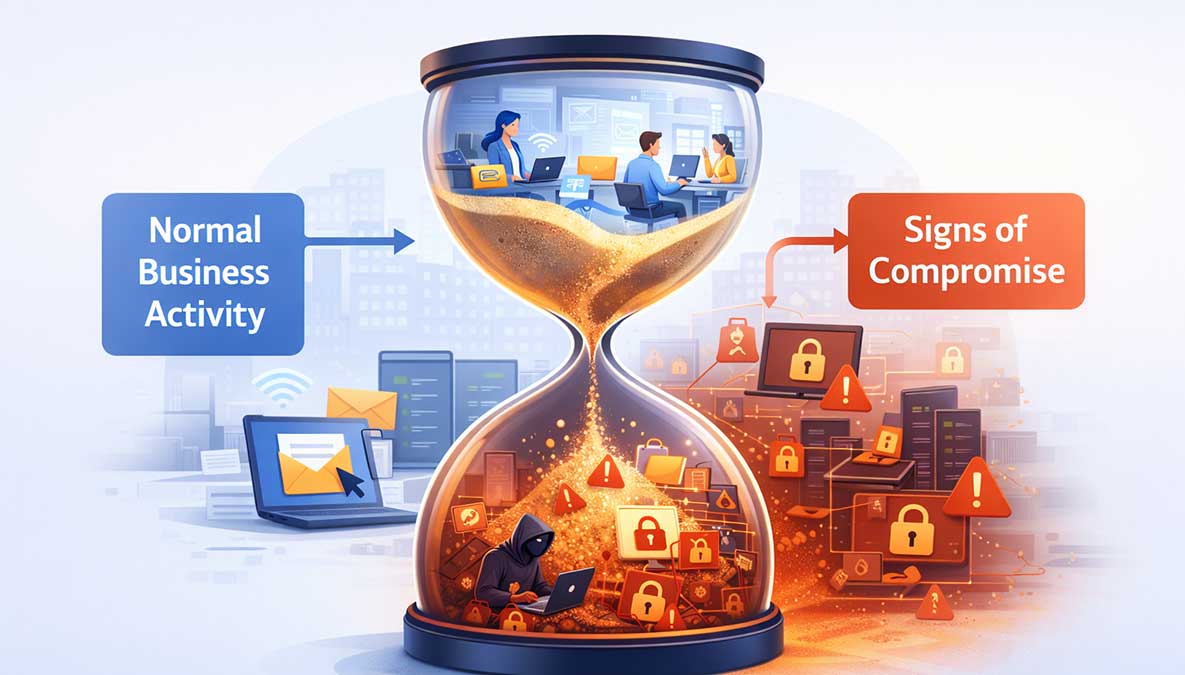
Detection is important. Response is critical.
The best cybersecurity solutions for small businesses include real-time response capabilities. When a threat is detected, action should happen immediately.
This may include:
Some platforms combine automated response with human oversight, ensuring that alerts are investigated and handled appropriately.
This combination of speed and expertise is one of the defining characteristics of effective modern cybersecurity.
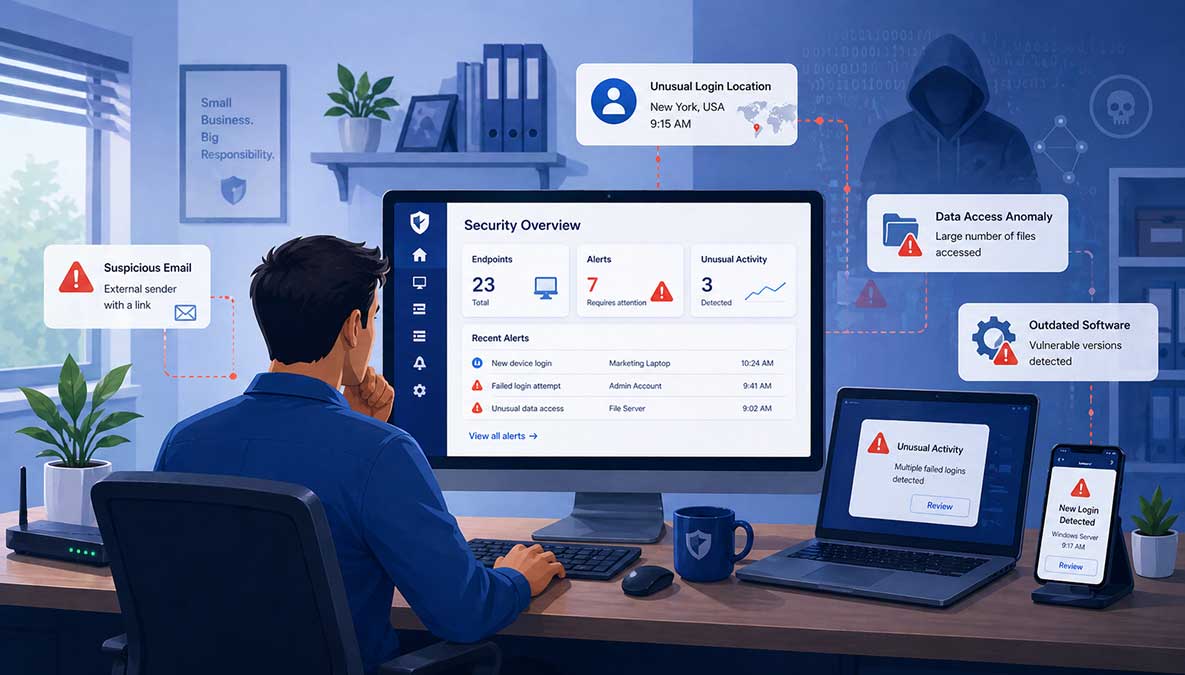
Small businesses often struggle with visibility. Security tools may be installed on individual devices, but there is no central place to see what is happening across the organization.
The best cyber security for small business environments includes centralized visibility.
This allows you to quickly understand:
Without visibility, even good tools can fail quietly.
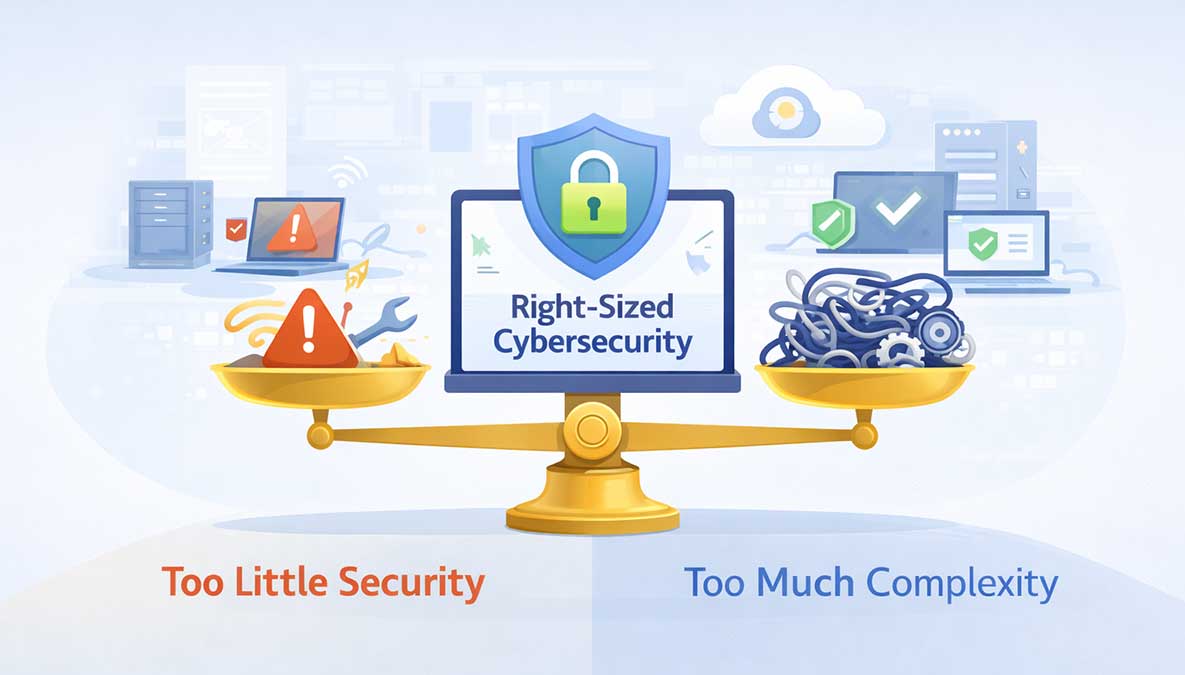
One of the biggest mistakes small businesses make is adopting overly complex solutions.
Enterprise-grade tools often assume dedicated security teams and constant monitoring. In smaller environments, this complexity can lead to misconfiguration or neglect.
The best cybersecurity solutions are designed to be:
Simplicity increases consistency, and consistency improves security.
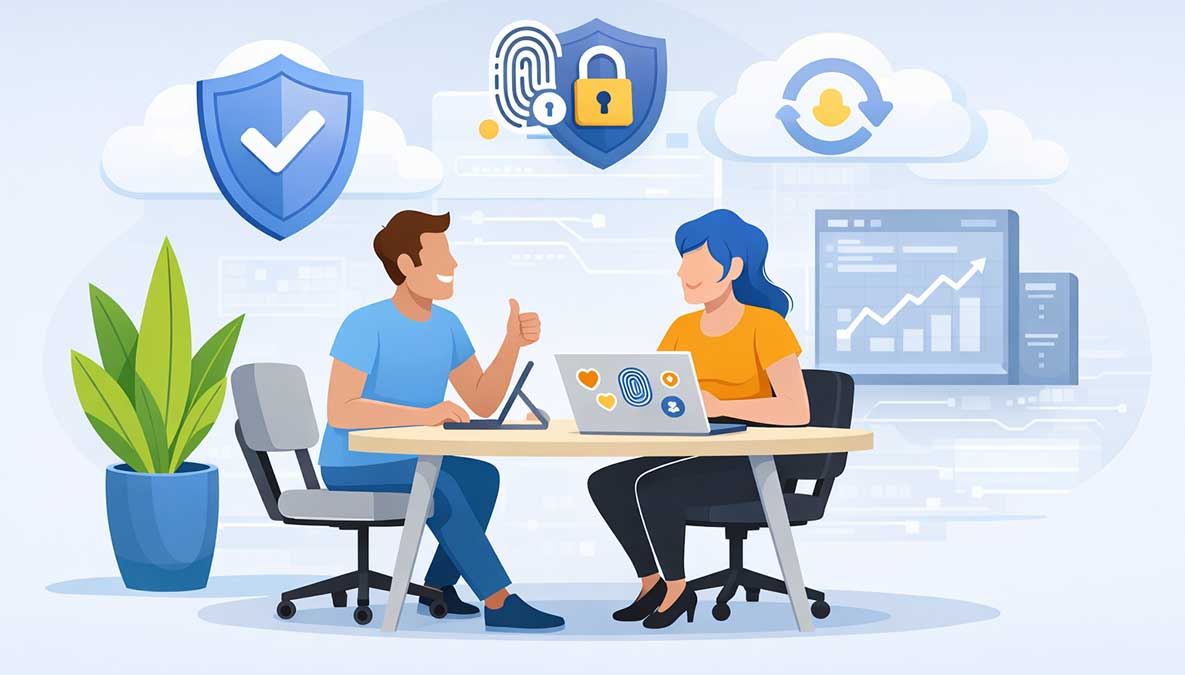
When you put everything together, the best cybersecurity for small businesses is not a single product. It is a layered approach that includes:
These controls address the most common attack paths and provide a practical level of protection without unnecessary complexity.
Small business owners do not need to become cybersecurity experts. They need to understand what matters and choose solutions that align with how their business operates.
If you are unsure where to start, our guide on What Is SMB Cybersecurity? provides a clear foundation. From there, focus on implementing the core protections outlined in this article.
The goal is not perfection. It is resilience.
Cyber threats will continue to evolve, especially as AI becomes more widely used by attackers. The businesses that remain secure will be the ones that invest in the fundamentals and apply them consistently.
Sponsored
Start your 14-day free trial and get visibility into your devices in minutes, no IT team required.
 Ben Loveless
Co-founder and Developer
Ben Loveless
Co-founder and Developer